ADA-compliant baby changing stations are fixtures that must be usable by people with disabilities without help, not products that simply carry an “ADA-compliant” label. In California, that distinction matters. A unit can be well-made, expensive, and still fail inspection if it is mounted too high, placed in the wrong location, or blocks required clear floor space.
Here’s the reality most property owners run into. The federal ADA does not explicitly require baby changing stations in every restroom, but once you install one, accessibility rules apply in full. California Title 24 adds another layer, because it is enforced through plan review, field inspections, and documented complaints. Inspectors do not evaluate intent. They measure reach, clearance, operability, and placement.
This article explains when baby changing stations are expected in California, how ADA and Title 24 work together, the exact technical requirements inspectors check, and how small installation mistakes often turn into enforcement actions or lawsuits.
What Property Owners Need to Know
ADA-compliant baby changing stations must be fully usable by people with disabilities—not just carry a compliance label
Mounting height, reach range, floor clearance, and operability are the most common inspection failure points
Title 24 enforces stricter rules than federal ADA, especially during plan review and building inspections
Once installed—even voluntarily—a changing station must meet full accessibility requirements
Common risks include mounting too high, installing in only one restroom, or blocking access with trash cans or doors
Violations often trigger Unruh Act lawsuits, not just ADA complaints
CASp inspections provide legal advantages and help document proactive compliance
Ongoing maintenance matters—broken or removed stations increase risk after sign-off
High-risk properties include restaurants, retail centers, entertainment venues, medical offices, and transit facilities
One mistake can lead to full property evaluations and five-figure settlements
What ADA-Compliant Baby Changing Stations Actually Mean
Let’s clear up a common misunderstanding right away: an “ADA-compliant” product doesn’t automatically mean the entire setup is compliant. Accessibility isn’t about labels or brochures it’s about real-world usability. A compliant baby changing station must be safely operable by people with disabilities in the actual built environment. That means it must be reachable, usable with one hand, and located in a way that doesn’t require tight maneuvering or awkward door swings.
Many property owners assume buying a unit labeled “ADA-compliant” checks the box. It doesn’t. Those labels refer to product specs—not to how or where the unit is installed. It’s entirely possible to install an ADA-labeled unit and still violate multiple accessibility codes.
How ADA and California Title 24 Apply to Baby Changing Stations
Accessibility codes in California are layered. The federal ADA provides the baseline, but California’s Title 24 often takes things further. Both apply—and when they differ, the stricter rule wins.
How Federal ADA Standards Apply
The ADA 2010 Standards for Accessible Design lay out the key accessibility features:
Operable parts must be usable with one hand and without tight grasping or twisting
Reach ranges typically allow a maximum of 48 inches from the floor
Clear floor space must allow for wheelchair approach and forward reach
While the ADA doesn’t require baby changing stations everywhere, it governs how they must function once installed. Enforcement can come through DOJ actions, civil rights complaints, or lawsuits filed under the ADA.
How California Title 24 Modifies and Enforces Requirements
Title 24 is California’s building code, and it’s the rulebook local building departments actually use.
Compared to federal ADA standards, California often:
Requires narrower reach ranges
Applies more detailed specs on maneuvering space
Prioritizes actual usability, not just dimensions
Local plan check reviewers and inspectors enforce these rules—so compliance is measured during permit approval, construction, and even post-occupancy if complaints arise.
When the Stricter Rule Controls
If Title 24 and the ADA conflict, you must follow whichever rule is stricter.
For example: if ADA allows a 48-inch reach but Title 24 says 44 inches, your installation needs to follow the 44-inch rule. California’s enforcement agencies—local building departments, the Division of the State Architect (DSA), and courts—expect full alignment with this “stricter rule” principle.
When Baby Changing Stations Are Required in California
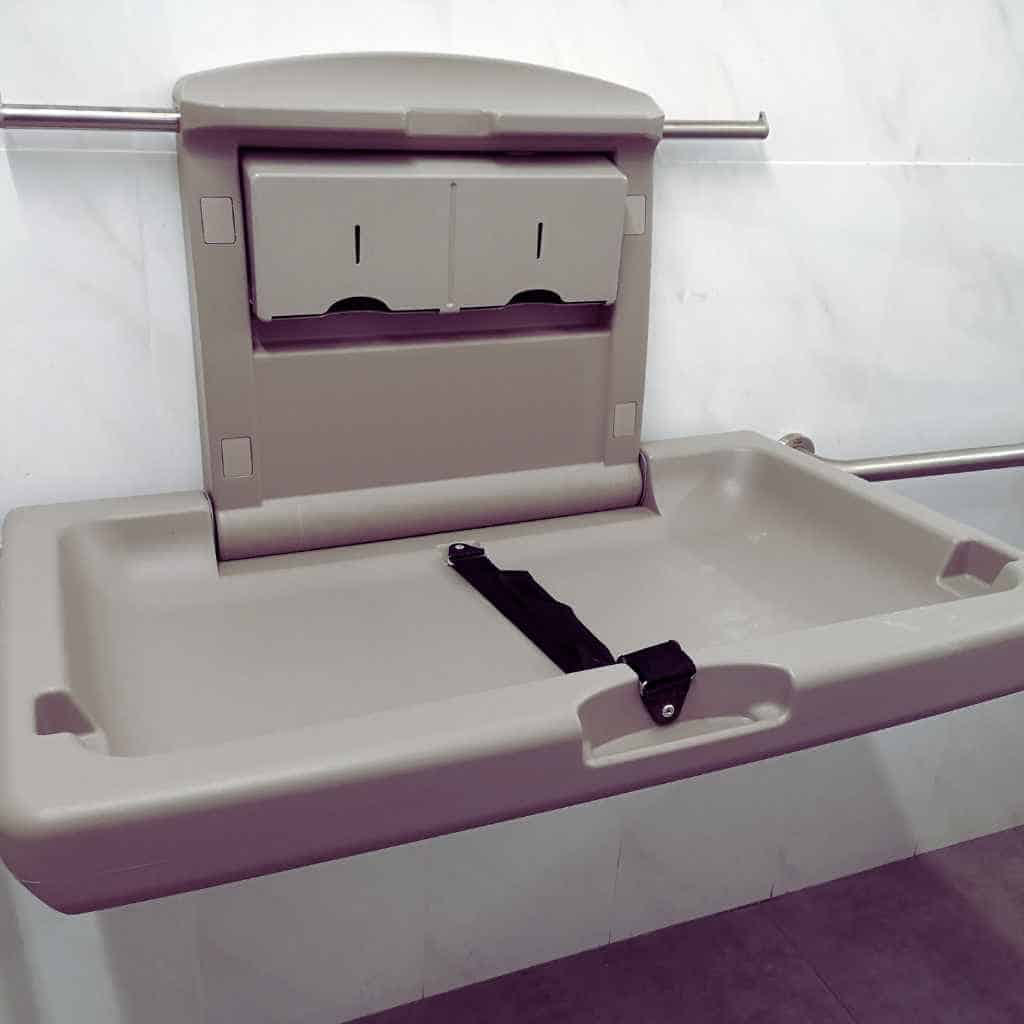
Are Baby Changing Stations Legally Required Under ADA?
The ADA doesn’t mandate baby changing stations in every restroom. There’s no blanket requirement—but the reality is more nuanced.
Public-facing businesses (restaurants, stores, entertainment venues) risk discrimination claims if they fail to provide basic family amenities. Lack of access to a baby changing station may trigger a disparate impact claim, especially for caregivers with disabilities.
When California Building Code or Local Jurisdictions Expect Them
California does have situations where changing stations are explicitly expected:
New construction and major renovations
Public-serving restrooms in places like:
Restaurants
Retail stores and shopping centers
Movie theaters
Medical offices
Transportation facilities
Local building officials may also require them during plan review, particularly in family or all-gender restrooms.
Voluntary Installation and Legal Responsibility
Here’s where many property owners get tripped up: installing a baby changing station voluntarily doesn’t exempt you from compliance.
In fact, once it’s in place, you’re fully responsible for ensuring it meets all applicable accessibility codes. And if it doesn’t? That’s a common trigger for lawsuits—especially when the station is installed but too high, hard to reach, or blocked by other fixtures.
Partial compliance is often riskier than no installation at all. The moment you offer the amenity, it becomes subject to both ADA and Title 24 standards.
Which California Buildings Face the Highest Risk
Restaurants and Cafés
Food service venues often serve families but fail to provide usable changing stations. Risk increases when amenities are available to the general public but not accessible to caregivers with disabilities. If you’ve got dine-in seating and restrooms open to the public, inspectors will expect full compliance.
Shopping Centers and Malls
These multi-tenant retail spaces see high foot traffic, including families and individuals with mobility devices. Central restrooms, especially those in food courts or common corridors, are routinely flagged if changing stations aren’t present or accessible.
Movie Theaters and Entertainment Venues
Locations like cinemas, arcades, bowling alleys, and family attractions face heightened scrutiny. When venues offer long dwell times and serve mixed-age groups, missing or noncompliant changing fixtures are seen as clear usability gaps.
Medical Offices and Outpatient Facilities
Even small healthcare spaces face ADA and Title 24 enforcement when serving the general public. Facilities like urgent care clinics, physical therapy centers, and pediatric offices must ensure that restrooms meet full access standards—including usable baby changing features when installed.
Transportation-Related Facilities
Bus terminals, train stations, and transit stops open to the public fall under federal ADA enforcement. Restroom access here is a known issue, especially in older facilities undergoing upgrades or expansion. Inaccessible changing stations often become grounds for complaints filed under the ADA or California’s Unruh Act.
Multi-Tenant Commercial Buildings
Lobbies, shared restrooms, and public-facing areas in multi-tenant buildings—especially when serving medical, government, or public retail tenants—are a consistent source of risk. Building owners are responsible for common areas and must ensure all installed features meet both federal and state standards.
Location Rules That Cause the Most Violations
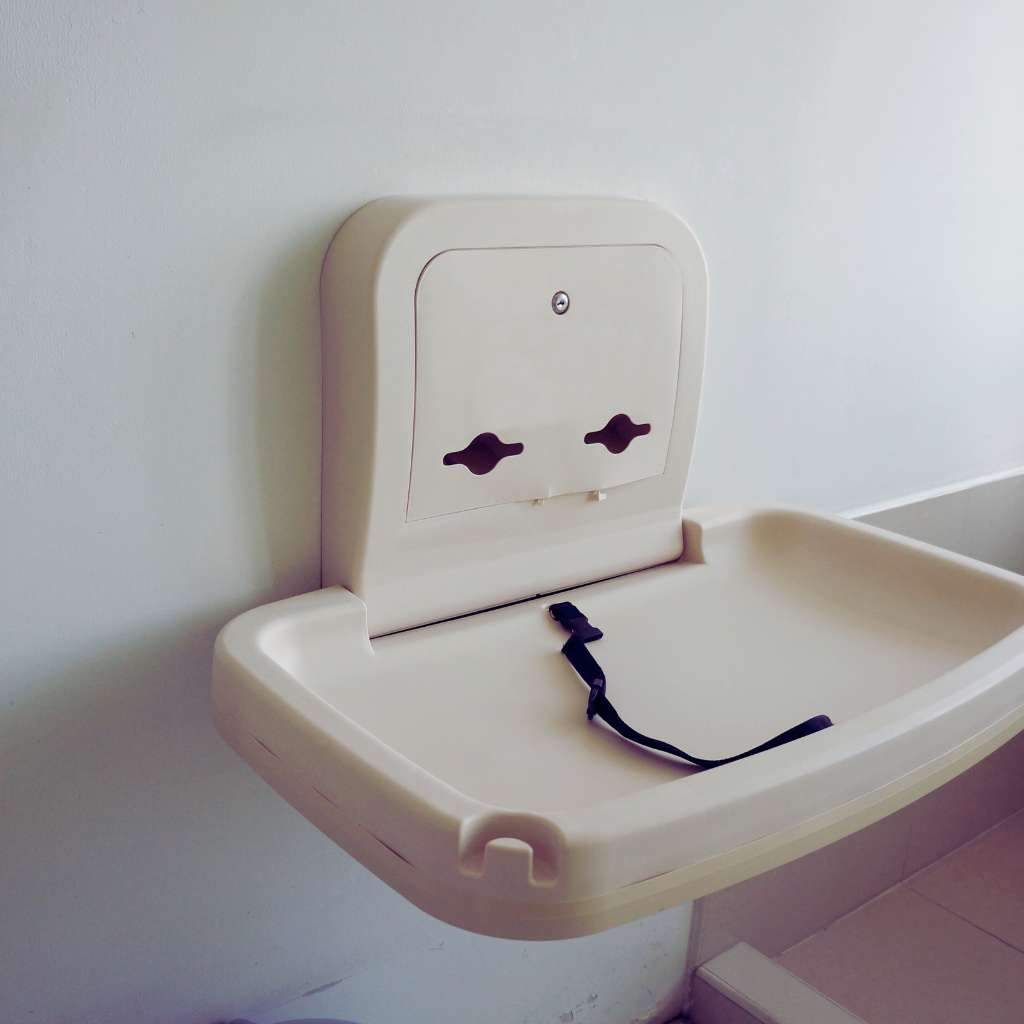
Placement errors are one of the top reasons baby changing stations fail ADA or Title 24 compliance. It’s not just about having a station installed—it’s about where and how it’s installed. These are the mistakes that get flagged most during inspections.
Restroom Type and Placement
Equal access is a non-negotiable. If baby changing stations are provided in a facility, they must be available to everyone, not just to one gender or restroom type.
Here’s what that means:
If a changing station is installed in the women’s restroom only, the men’s restroom must offer equivalent access, or a separate, compliant family or all-gender restroom must be available nearby.
All-gender restrooms, when present, are often the best placement option—but only if they meet all access requirements for space, reach, and operability.
Violations often occur when changing tables are placed inconsistently, or where no accessible alternative exists. Inspectors look for equity, not just presence.
Door Swing and Maneuvering Conflicts
Door interference is one of the most common reasons a station fails inspection—even if everything else appears compliant.
Let’s break this down:
If the restroom door swings into the required clear floor space, that installation fails.
Changing tables installed inside stalls rarely work due to space limits. Most stalls don’t provide the 30″ x 48″ minimum clear space with additional maneuvering clearance for approach and use.
Even in open areas, wall obstructions or trash bins can block the approach path, reducing usable space below compliance thresholds.
It’s not enough to have a compliant product on the wall. If it can’t be approached, opened, and used without obstruction, it fails.
Common Baby Changing Station Compliance Failures
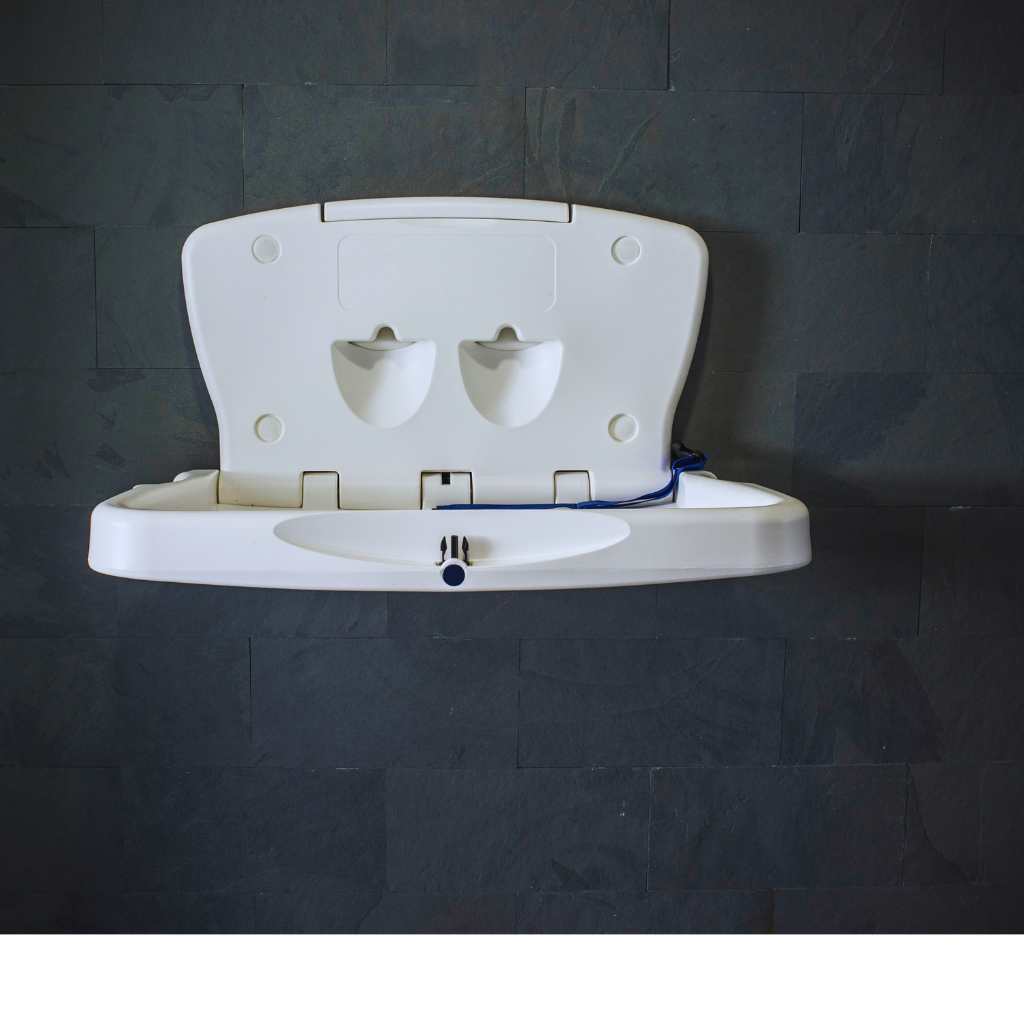
Failure points show up in nearly every inspection where changing stations are installed. The issue usually isn’t whether a station exists—it’s whether it was installed correctly, maintained, and remains fully accessible under both ADA and Title 24.
These are the violations that show up again and again in field reports:
Mounted Too High
Exceeding reach ranges is one of the most common errors. The ADA limits forward reach to 48 inches maximum (or 44 inches under California Title 24 in certain conditions). Many stations are mounted based on manufacturer templates that ignore real-world reach limitations—especially when the station folds down over a trash can or has no side clearance.
No Clear Floor Space
The clear floor space required for wheelchair users is 30 by 48 inches minimum. This area must be directly in front of the unit, on an accessible route, and free of any encroachment. If a door swings into this zone or the turning radius isn’t respected, the installation fails—even if everything else looks right.
Obstructed by Trash Cans or Doors
This is a real-world failure that keeps coming up. A station can be installed at the right height, with technically sufficient space—but if a trash bin is placed underneath, or a door opens into the space, it creates a barrier. These obstructions often appear after installation, which is why ongoing inspection matters.
Installed in Only One Restroom Without Alternative Access
Providing a station in just one restroom—especially only in the women’s room—creates an access disparity. ADA and Title 24 require equivalent facilitation, meaning all users must have access regardless of gender. Inspectors cite this regularly in public-serving buildings with separate restrooms.
Broken or Removed After Inspection
Post-inspection removals or mechanical failures trigger enforcement quickly. Hinges break, latches stick, or units are taken out during renovation but never replaced. If a station was installed at approval but later becomes unusable, it’s a compliance issue. Lack of maintenance is just as risky as poor design.
Maintenance and Ongoing Compliance Responsibilities
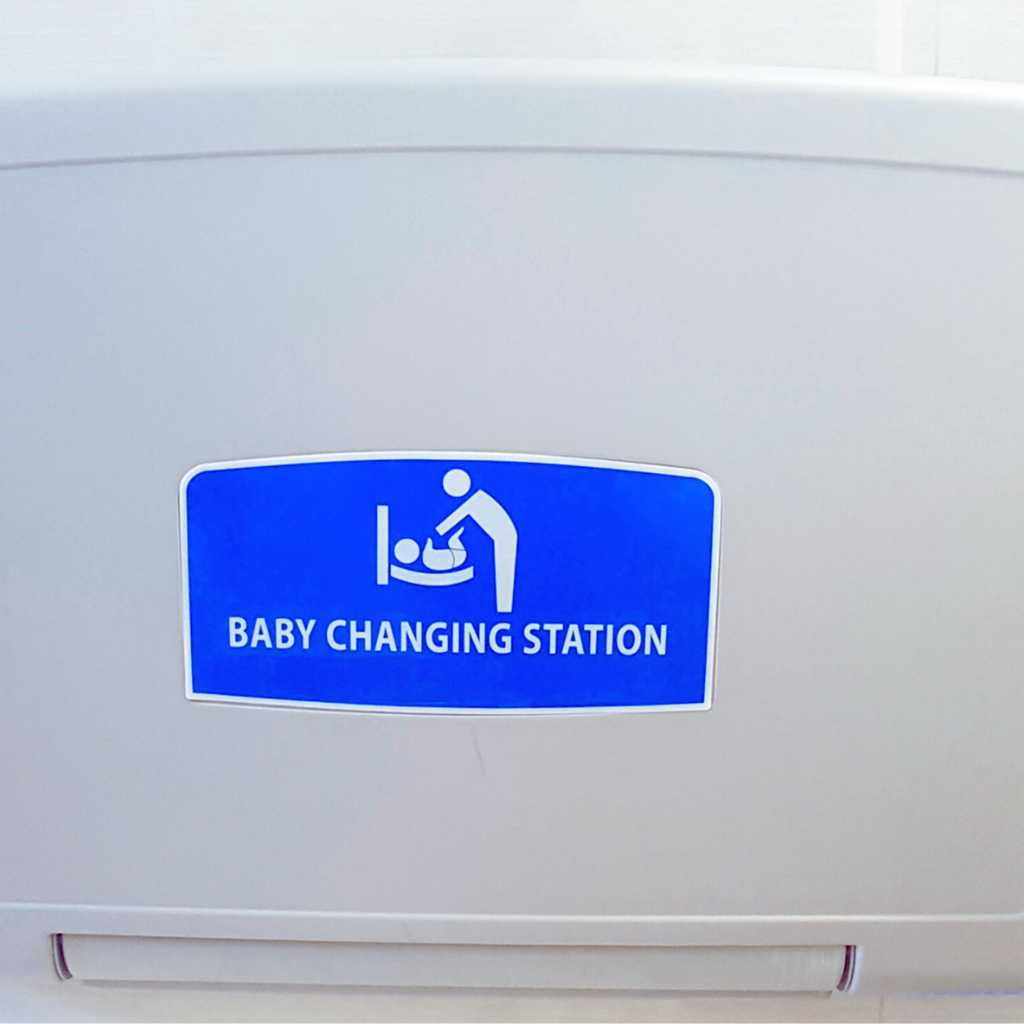
Compliance isn’t a one-time event. Installing a baby changing station correctly doesn’t guarantee long-term accessibility. Over time, changes in condition, layout, or use can turn a once-compliant feature into a violation. This section addresses the problems that show up after inspections—and still carry legal and regulatory risk.
Broken Hinges or Latches
Physical failure is a top reason changing stations become unusable. Hinges wear out, latches stop securing, or the unit no longer folds down properly. If a parent or caregiver with limited strength can’t safely operate it, the station fails accessibility tests under both ADA and Title 24.
Excessive Operating Force
Usability is part of compliance. If a changing station requires tight grip strength or two hands to operate, it violates the operable parts requirement under Section 309 of the ADA Standards. CASp inspections often fail units for this—especially older models or poorly maintained installations.
Removed Units After Approval
Removing a station after final sign-off is a compliance reversal. Whether it’s due to remodeling, vandalism, or cost-saving, the absence of a previously documented unit creates an enforcement trigger. Owners should treat changing stations like any other permanent fixture—removal is not discretionary.
Temporary Obstructions Becoming Permanent Violations
Items like trash cans, storage bins, or signage that block approach or floor space turn temporary issues into lasting violations. These changes may happen gradually—especially when janitorial teams or staff move items for convenience. But to an inspector or plaintiff, the access is blocked. The violation stands.
How Complaints, Lawsuits, and Enforcement Actually Start
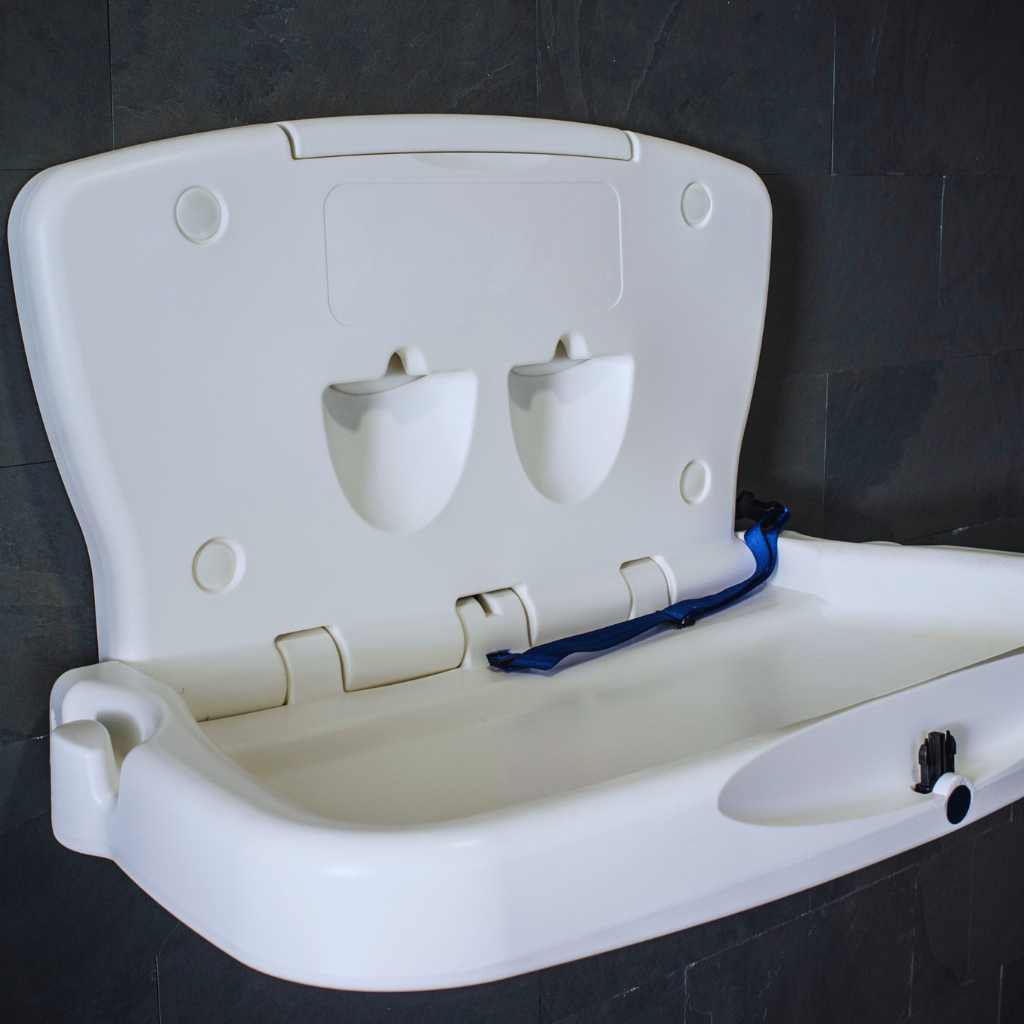
ADA enforcement doesn’t begin with a warning—it often begins with a lawsuit. Most property owners don’t realize that baby changing station violations are often flagged not by inspectors, but by users. These issues fall into a legal gray zone that’s increasingly targeted under both federal and state law.
ADA Complaints vs. Unruh Act Claims
Under federal law, Title III of the ADA allows individuals to file complaints for lack of accessible features in public accommodations. These can trigger Department of Justice investigations or private lawsuits, often with demands for injunctive relief and legal fees.
But in California, most cases come through the Unruh Civil Rights Act, which allows monetary damages for disability-based discrimination—even unintentional. This is where changing stations show up: not just as construction issues, but as barriers to equal use.
Why Baby Changing Stations Are Cited as Disparate Impact
Here’s what that means: if your facility serves families, but only some parents can safely use a changing station due to disability or restroom design, that’s a disparate impact. Courts and CASp inspectors have flagged this in restaurants, clinics, and shopping centers statewide.
The violation isn’t just the absence of a station—it’s the denial of equal functionality.
How Small Violations Escalate Into Settlements
A single non-compliant station can spiral into a multi-point lawsuit. One claim leads to a full CASp evaluation. That evaluation uncovers other issues—improper signage, incorrect door hardware, slope violations. Suddenly, you’re negotiating a five-figure settlement and public corrective plan.
Most property owners aren’t sued for nothing. They’re sued for partial compliance—where something was installed but doesn’t meet code.
Insurance Coverage Limitations
General liability insurance rarely covers ADA lawsuits. These claims aren’t considered accidents—they’re seen as civil rights violations. Most policies exclude accessibility claims unless you have specific Employment Practices Liability Insurance (EPLI) or other riders.
That means out-of-pocket costs for legal fees, remediation, and plaintiff damages.
How CASp Inspectors Evaluate Baby Changing Stations
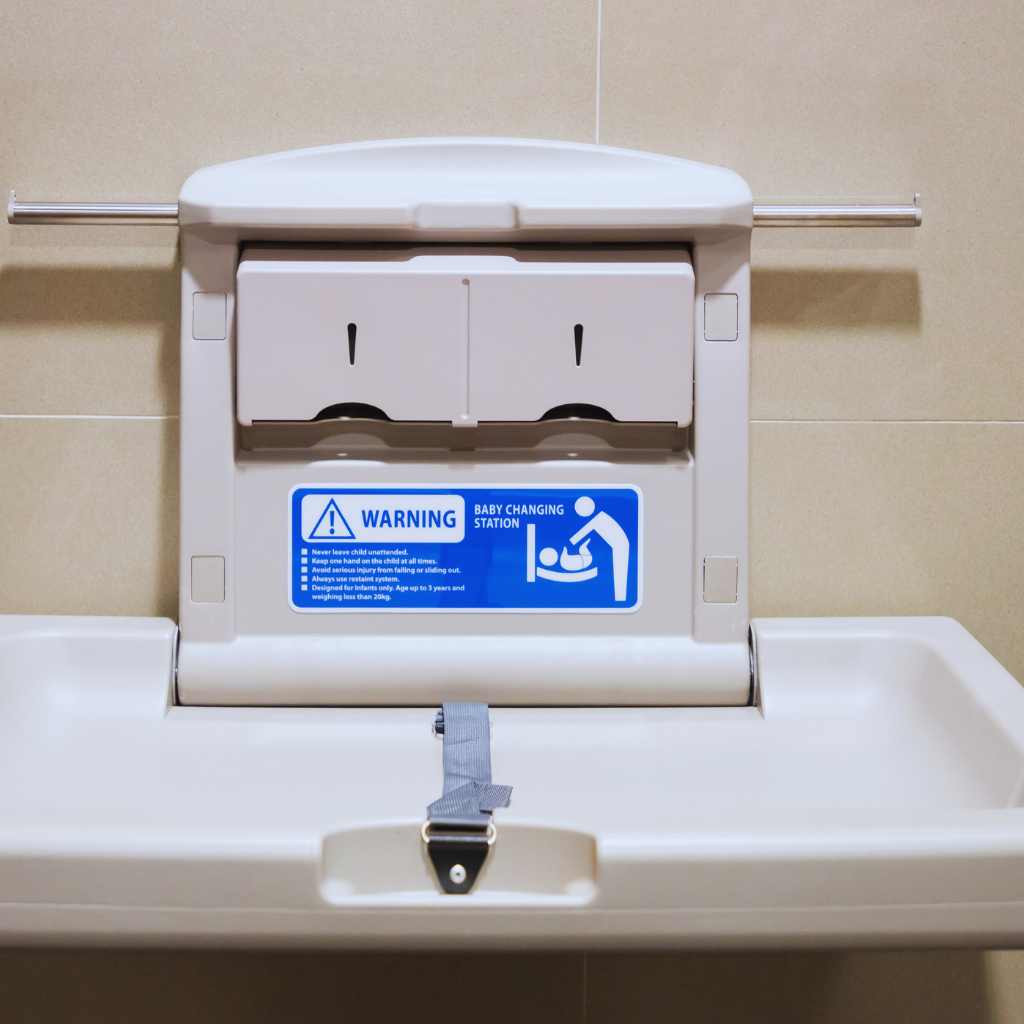
Certified Access Specialists (CASp) are licensed professionals in California trained to evaluate accessibility under both the ADA 2010 Standards and California Title 24. When they review baby changing stations, they’re not looking at brand names—they’re measuring compliance against precise technical criteria.
What CASp Inspections Review
During a CASp inspection, these are the most common baby changing station elements under review:
Mounting height and reach: CASp inspectors verify whether the operable part (typically the handle) is within required reach range—usually 48 inches maximum under ADA and often 44 inches under Title 24. If the handle or latch is too high, the unit fails.
Floor clearance: The required clear floor space—typically 30 inches by 48 inches—must be provided directly in front of the unit for forward approach. Inspectors will note obstructions from walls, door swings, or nearby fixtures like trash cans.
Operability: The station must open and close using one hand and minimal force (less than 5 pounds of pressure). CASp professionals physically test operation. If it sticks or requires tight grip strength, it fails.
Placement context within restroom: Inspectors assess not just the wall it’s mounted on, but how it functions within the room. They look at whether users can approach it safely, turn in front of it, and use it without interference.
These are technical evaluations, not visual judgments. “Looks fine” doesn’t pass a CASp inspection.
Why CASp Reports Matter for Risk Reduction
A formal CASp inspection does more than document compliance—it positions you to defend your property.
Qualified Defendant status: In California, property owners with a current CASp report and timely response gain special protections in legal proceedings, including reduced statutory damages and early resolution timelines.
Litigation posture advantages: CASp reports show good faith effort. Judges and opposing counsel take that seriously in ADA-related cases. It signals proactive management, not neglect.
Documentation value: If your station was compliant at the time of inspection, and you’ve maintained it, that report becomes key evidence in any future complaint. It’s your baseline.
Practical Compliance Checklist for Owners
This isn’t theory. These are the exact checks CASp inspectors use when evaluating baby changing stations in California buildings. If you’re a property owner, architect, or contractor, use this list to self-assess installations—or to prepare for inspection. Every item addresses a specific failure pattern seen in real ADA lawsuits and Title 24 violations.
Confirm Legal Trigger
Start with scoping. Did your project involve new construction or a significant alteration to a restroom used by the public? If yes—and the facility serves families or the general public—you’re expected to install baby changing stations.
Even if the law didn’t strictly require one, once a station is installed, it must comply fully. Partial compliance isn’t protected.
Verify Mounting Height and Reach
Measure from the finished floor. The highest operable part (usually the handle or latch) must be within 48 inches under ADA, and often no more than 44 inches under California Title 24. Use a rigid measuring tool—not just manufacturer templates.
If your station folds out past a fixed obstruction, that reach range may fail even if the mounting height looks acceptable on paper.
Measure Clear Floor Space
You need 30 inches by 48 inches of clear, level floor space in front of the unit for forward approach. It must be on an accessible route, not blocked by doors, fixtures, or movable items.
Inspectors often flag floor space issues when units are installed near entry doors or in tight corner layouts. Trash bins, wall returns, and baby stalls can create subtle violations.
Test Operability
Use one hand. Apply no more than 5 pounds of force. If the station can’t be opened, closed, or latched without two hands or significant effort, it fails. This includes heavy spring tension, faulty hinges, or sticky latches.
ADA Section 309.4 sets this standard—and inspectors test it directly.
Review Placement Equity
Look at all restrooms. If your property has men’s and women’s restrooms, both need changing stations—or you must provide a compliant all-gender or family restroom nearby.
This is where many lawsuits start: the changing station exists, but it’s not equitably accessible across genders or restroom types.
Document Installation and Maintenance
Maintain written records of your installation specs, model numbers, height measurements, and inspection logs. If your changing station passes today but fails tomorrow due to damage or obstruction, these records help defend your intent and timeline.
If you ever remove a unit or alter a restroom layout, revisit compliance immediately—especially before leasing to a new tenant or completing a remodel.
Real Questions Owners Ask About Baby Changing Stations
These aren’t hypothetical. These are the actual questions CASp consultants hear from building owners, contractors, and tenant improvement teams—especially after a failed inspection or a legal demand letter.
Are baby changing stations required in California?
Yes and no — it depends on the project type and occupancy.
California Building Code (Title 24) requires baby changing stations in certain public-use restrooms when they’re part of new construction or significant alterations in occupancies like restaurants, theaters, retail stores, and medical offices. The law also requires equitable access, which means they must be provided in restrooms serving all genders if restrooms are separated.
If you choose to install one voluntarily—even if not required—you must still meet full ADA and Title 24 compliance.
Can a small restroom comply?
Yes, but only with careful design.
There’s no exemption based purely on restroom size. If a baby changing station is installed in a small restroom, it must still provide clear floor space, reach range, and operable part access. In tight layouts, this often means avoiding inside stalls or areas near inward-swinging doors.
If you can’t meet these space and usability requirements, it’s better not to install one at all than to install a non-compliant one that increases risk.
Are older buildings exempt?
No — not automatically.
There’s no “grandfather clause” under ADA or California Title 24 that exempts older buildings from accessibility requirements. The trigger is alteration or addition. If you renovate or repurpose a restroom, you may be required to bring elements into compliance—including changing stations if applicable under the occupancy use.
Even without renovation, voluntarily added features must meet full code standards at the time of installation.
Do both restrooms need one?
Yes — if both restrooms serve the public.
Installing a baby changing station in just the women’s room creates a gender-based access disparity. To comply with ADA and Title 24, you must provide equivalent access for all users. This typically means installing a station in both restrooms—or providing a fully accessible family or all-gender restroom nearby.
This is one of the most common lawsuit triggers under the Unruh Civil Rights Act in California.
What happens if it’s broken?
It becomes a compliance failure — and legal risk.
A broken latch, warped frame, or sticky hinge makes the unit inoperable, which violates ADA operable parts rules (Section 309). If a user with a disability can’t open and use it with one hand and limited force, it’s noncompliant.
Even worse, if the station was cited as present in a CASp report or approved plan but later fails, your legal exposure increases. Maintenance matters.
Final Guidance for California Property Owners
Baby changing stations carry more legal and operational risk than most property owners realize. They’re small fixtures, but they sit at the intersection of civil rights law, building code enforcement, and public expectations. When installed improperly—or maintained poorly—they can trigger lawsuits under the ADA or California’s Unruh Act. Not because they’re missing, but because they’re there and unusable.
Compliance failures usually happen in one of three ways: the station is installed at the wrong height, it lacks proper floor clearance, or it’s placed in a restroom that excludes certain users. Sometimes it’s all three. These mistakes aren’t just technical—they signal to inspectors and plaintiffs that accessibility wasn’t taken seriously. And when one error is found, it often leads to a broader inspection or full CASp evaluation that uncovers more violations.
Proactive review makes the difference. If your building serves families—retail, food service, medical, entertainment—it’s worth checking your current installations before they’re flagged. A CASp inspection, internal checklist, or even a basic measurement walk-through can surface preventable issues before they escalate into legal problems.
The key is to treat baby changing stations like any other regulated fixture. Document compliance. Maintain them like permanent features. Review them during renovations. Because in the eyes of the law, they’re not convenience items—they’re access features. And when they fail, they fail hard. For properties that serve families daily, it’s smart to review restroom access before issues arise. A CASp review for public-facing facilities can uncover these risks early.
Authoritative ADA and California Code References
ADA 2010 Standards for Accessible Design
https://www.ada.gov/law-and-regs/design-standards/2010-stds/
California Building Standards Commission – Title 24 Access Compliance
https://www.dgs.ca.gov/BSC/Codes
Division of the State Architect (DSA) – Access Compliance Resources
https://www.dgs.ca.gov/DSA/Resources/Access-Compliance-Reference-Materials