ADA bathroom dimensions are the required measurements that make a restroom usable for people with mobility, strength, or reach limitations. In California, these dimensions follow the federal ADA Standards along with California Title 24, which adds its own construction rules and inspection criteria. If you work with commercial properties, public facilities, or tenant improvement projects, you are expected to meet both sets of requirements.
Most violations come from simple dimensional errors. A toilet centerline that is off by one inch, a grab bar placed too high, or a door that blocks the turning space is enough to trigger a failed inspection or an accessibility complaint. This guide lays out the exact measurements you must follow so you can design, remodel, or evaluate a restroom with confidence and avoid costly corrections later.
Key Dimensional Rules California Owners Must Know
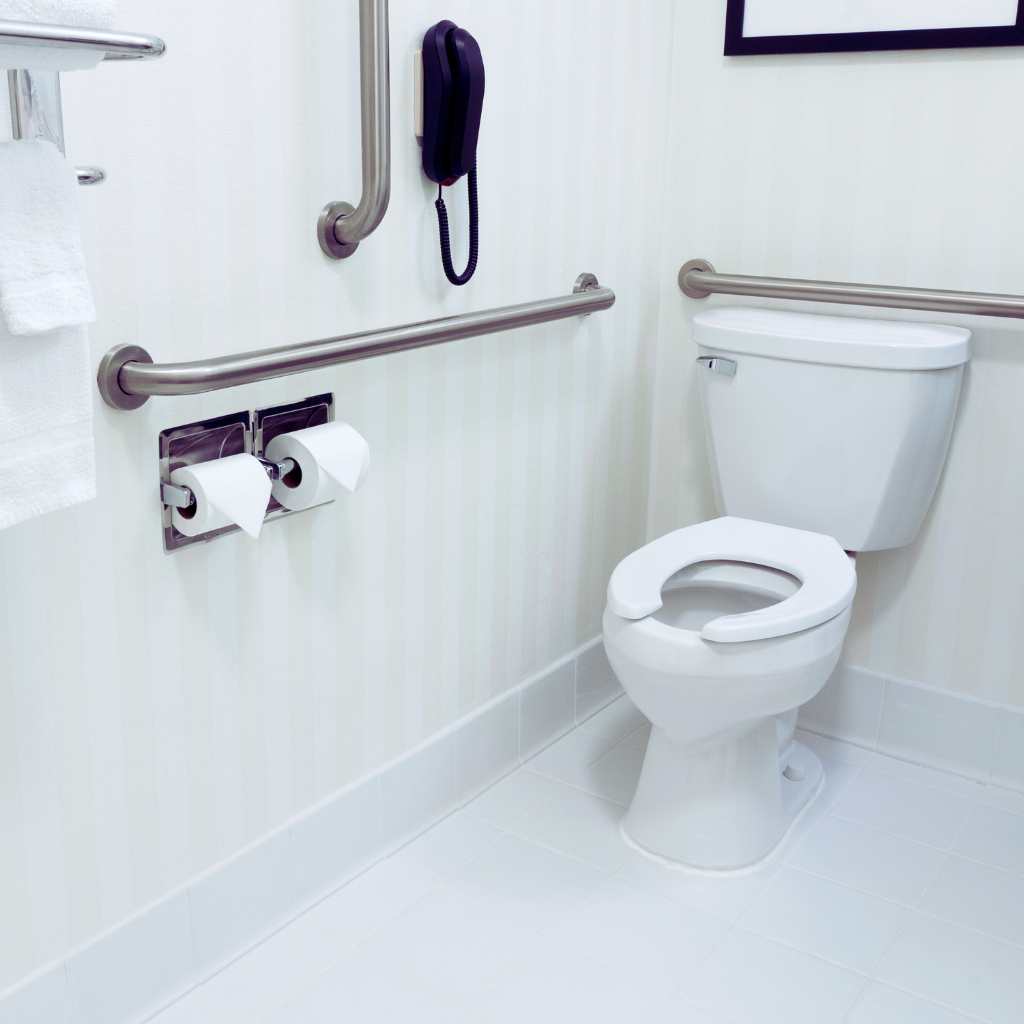
Before you get into drawings or field measurements, it helps to understand the core dimensions that control almost every compliant restroom in California. These are the measurements that inspectors check first because they determine whether a person using a wheelchair or mobility aid can actually move, turn, and reach what they need. If any of these fall short, the entire room becomes difficult or impossible to use.
ADA and California Title 24 both apply, and the stricter rule controls. California often sets additional construction requirements that go beyond the federal minimums.
Minimum turning space must allow a full wheelchair turn. A 60 inch circle or a T-shaped turning area is required.
Clear floor spaces must be kept open and usable. Each major fixture needs a 30 inch by 48 inch rectangle of unobstructed space.
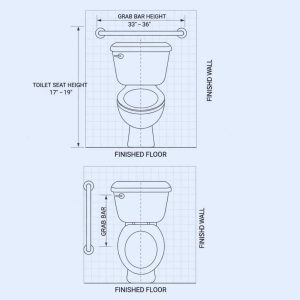
Toilet dimensions must meet tight tolerances. This includes the 16 to 18 inch centerline from the side wall, the 17 to 19 inch seat height, and properly aligned grab bars.
Accessible stalls must follow specific width, depth, and door swing rules. Ambulatory stalls have their own separate size requirements.
Doorways must provide enough maneuvering space to open and close the door independently. This includes minimum clear openings and required pull-side areas.
Accessories must stay within legal reach ranges. Items like towel dispensers, dryers, and soap dispensers must fall within ADA and Title 24 mounting heights.
How Bathroom Accessibility Rules Work in California
California’s accessibility rules sit on top of the federal ADA Standards, which means you’re working with two authorities at the same time. The ADA sets the civil rights baseline. California Title 24 adds construction-level requirements and inspection criteria. To stay compliant, you need to understand how these layers fit together and when they apply to your project.
What ADA-Compliant Bathroom Dimensions Actually Mean
When we talk about ADA-compliant bathroom dimensions, we’re talking about the amount of room a person needs to move, turn, transfer, and reach fixtures without barriers.
It isn’t just about installing the right toilet or sink. It’s about creating usable space around those fixtures so someone using a wheelchair or mobility device can complete basic tasks safely.
ADA dimensions focus on:
Turning space so a person can rotate without hitting walls or obstacles.
Clear floor space so someone can approach toilets, sinks, and dispensers.
Reach ranges so controls and accessories are placed where users can operate them.
These requirements are based on real movement patterns, not aesthetics or preference. If the space doesn’t allow proper approach or transfer, it’s not accessible.
How ADA Standards and California Title 24 Interact
Here’s the part that confuses most owners and contractors: you must follow both federal ADA rules and California Title 24.
They are not interchangeable. They don’t cancel each other out. And they don’t say the same thing.
The ADA sets minimum civil rights access requirements for public accommodations and commercial facilities nationwide.
California Title 24 and the California Building Code (CBC) add construction-specific rules, often with extra detail or stricter measurements.
The practical rule is simple:
You must follow whichever requirement is stricter.
This is why a restroom that “passes federal ADA” can still fail a California inspection. Title 24 bathroom accessibility requirements covers reinforcement, mounting heights, reach limits, clearances, and other construction details that ADA alone does not fully define. A CASp inspector or building official will always apply California’s stricter standard when the two differ.
When Bathroom Dimension Rules Apply in California Buildings
These rules don’t apply only when you build a brand-new restroom. In California, bathroom accessibility requirements are triggered by several types of work, and missing these triggers is one of the main reasons projects fail during plan check or field inspection.
Bathroom dimension rules apply during:
New construction of commercial or public facilities.
Alterations that affect restroom layout, fixture locations, or circulation space.
Tenant improvement (TI) projects where restrooms are upgraded or reconfigured.
Changes of use, such as converting office space into medical space or retail.
Path-of-travel upgrades, which California requires when certain construction valuation thresholds are met.
Public facilities in state or local government buildings, schools, transit centers, and similar spaces.
California does not offer a “grandfathered exemption” from ADA. Existing buildings must remove barriers where it is readily achievable, and alterations must meet current standards unless technically infeasible, which must be documented.
ADA vs ASME A117.1 — What Each Code Actually Covers
Most bathroom projects go sideways because the team isn’t clear on which rules actually control the dimensions. I see this mistake all the time. Someone grabs ASME, someone else references ADA, and the drawings end up following neither correctly. Here’s the straightforward breakdown so you’re not guessing during design or construction.
What ADA Bathroom Rules Actually Regulate
The ADA is a civil rights law, and its design standards control the minimum dimensions and clearances a bathroom needs so a person with a disability can move safely. When we talk about:
turning space
clear floor space
toilet centerlines
lavatory knee clearance
reach ranges
that all comes directly from ADA 2010 Standards. These measurements shape how people move through the room, not just where fixtures sit. If someone can’t enter, turn, reach controls, or transfer independently, the bathroom is not accessible under ADA.
How California Title 24 Changes the Picture
California adds another layer: Title 24, the state building code. It sits on top of ADA and often goes further. Title 24 tightens details like reach ranges, grab bar placement, and certain mounting heights. If the two standards differ, inspectors use the stricter one. That’s why bathrooms built “to ADA” alone still fail plan review in California. Title 24 is not optional it is enforceable.
What ASME A117.1 Actually Covers (and Why It Confuses People)
I see this mix-up often. Contractors grab the wrong standard, architects rely on outdated templates, or someone reads an online forum and assumes ASME controls bathroom layout. When you’re designing or renovating a restroom in California, remember this simple rule: ADA sets federal accessibility dimensions, Title 24 enforces California’s version of those dimensions, and ASME is not the governing standard for bathroom layout.
Why This Distinction Matters
I have seen bathroom plans rejected in minutes because someone relied on ASME instead of ADA or Title 24. It’s a simple mistake, but it leads to costly redesigns and stalled construction. Once you know which standard controls the dimensions, the rest of the project becomes far more predictable.
Exact ADA and Title 24 Bathroom Dimensions You Must Follow in California
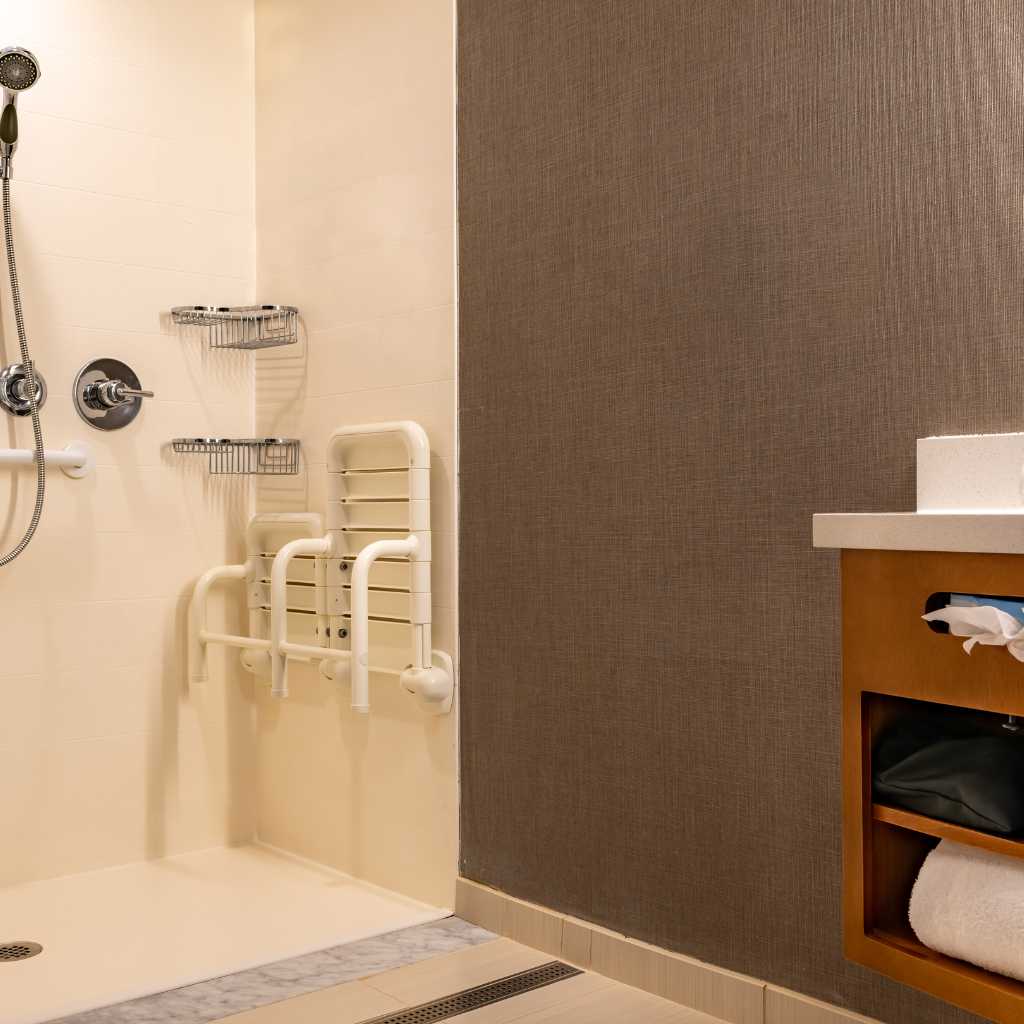
This is the part most owners, architects, and contractors look for because these measurements are what fail projects during inspections. Bathroom accessibility in California comes down to movement, reach, and usable space. The law cares less about how the room “looks” and more about whether a person using a wheelchair or mobility aid can enter, turn, reach fixtures, and exit without assistance.
Here’s how the core dimensions work in real projects.
ADA Turning Radius Requirements
Turning space is the core of bathroom accessibility. A user needs enough room to rotate without hitting a sink, toilet, or door. The law recognizes two patterns.
60-Inch Circular Turning Space
A 60-inch diameter circle must fit on the floor.
Some overlap with clear spaces at sinks or toilets is allowed, but the surface must remain open. In real inspections, clutter is a common failure brooms, trash bins, and storage often shrink the usable turning area.
T-Shaped Turning Space
A T-shape can substitute where the room is narrow.
Each arm must be 36 inches wide and the full T must fit inside a 60-inch square.
The user must be able to enter each arm without obstruction.
Required Clear Floor Spaces Around Fixtures (30 × 48 Inches)
Clear floor space is a dedicated use zone. It’s what lets a wheelchair user pull forward, park, and operate a fixture. Every major element in the room needs its own 30 × 48 inch space.
Lavatories (Sinks)
A sink must support a forward approach. That requires:
Knee clearance: 27 inches high at 8 inches depth, reducing to 9 inches at 11–25 inches depth
Toe clearance: 9 inches high at a depth of 6 inches
A full 30 × 48 inch clear space in front
Protected pipes: California requires insulation or shielding to prevent burns and injuries
The most common failure here is cabinetry or exposed piping that blocks knee space. If you want broader context on how these rules fit into restroom design, the California ADA bathroom requirements page explains the functional obligations that sit alongside dimensional rules and often affect layout decisions.
Toilets
A toilet requires its own 30 × 48 inch approach space.
That space must be usable for transfers and cannot overlap with an inward-swinging stall door. California inspectors see this mistake frequently layouts that appear compliant until the hardware goes in.
ADA-Compliant Toilet Dimensions
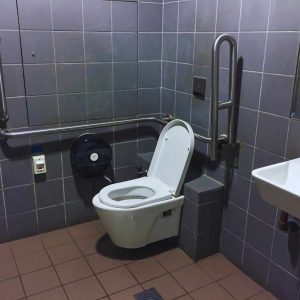
These measurements determine whether a user can safely transfer and rely on grab bars.
Toilet Centerline (16–18 Inches)
The center of the toilet must fall 16–18 inches from the side wall.
Title 24 enforces this tightly, and inspectors measure it precisely.
Seat Height (17–19 Inches)
From the finished floor to the top of the seat, the height must be 17–19 inches.
Anything outside this range affects stability during transfers.
Grab Bar Heights and Distances
Side and rear grab bars follow strict placement rules.
Typical height: 33–36 inches from the finished floor
Required lengths vary by location
Bars must sit within defined horizontal distances from the toilet
I see many contractors install bars in the right place but miss the clearance behind the wall. California requires proper structural backing, not anchors into drywall, and owners often benefit from reviewing ADA grab bar installation requirements in California to avoid repeat failures.
Bathroom Door Width, Approach, and Maneuvering Clearances
Even a perfectly designed interior fails if someone can’t enter the room. The door must operate independently, without trapping or forcing the user into unsafe angles.
32-Inch Minimum Clear Width
The clear opening must be at least 32 inches when the door is open 90 degrees.
This is the bare minimum that allows for safe entry and exit.
Required Pull-Side and Push-Side Space
A door needs room for someone to reach the handle, pull or push, and move their chair without blocking their own path.
The pull-side typically requires 18 inches of clear wall space beside the latch. Push-side requirements change depending on hardware.
Title 24 Door Hardware Rules
Door hardware must:
Operate with one hand
Require no tight grasping, pinching, or twisting
Work with minimal force
Lever-style handles remain the most reliable way to meet both ADA and Title 24 rules.
ADA Lavatory Height, Counter Rules, and Faucet Requirements
These rules determine whether a sink is physically usable from a seated position.
34-Inch Maximum Height
The countertop or rim cannot exceed 34 inches above the finished floor.
This position aligns with the required forward-approach geometry.
27-Inch Knee Clearance at 8-Inch Depth
The space under the sink must remain 27 inches high for the first 8 inches of depth.
This allows the user’s knees and footrests to clear the underside safely.
Operable Parts and Reach Ranges
Faucets and soap dispensers must fall within compliant reach ranges and operate without twisting or force.
Motion activated faucets typically comply as long as activation is reliable and within reach.
Title 24 Rules That Differ From Federal ADA

Federal ADA sets the baseline, but California’s Title 24 adds stricter construction requirements. These differences matter because a restroom can pass under ADA and still fail during California plan review or inspection. Here’s what owners and contractors need to know before they hang a mirror, place a dryer, or close a wall.
Stricter Reach Ranges for Fixtures and Accessories
California tightens the reach rules to account for real-world user limitations.
The biggest shift is how high or low an operable part can be installed.
Here’s the practical breakdown:
Forward reach limits: ADA allows a maximum of 48 inches. Title 24 lowers some conditions to 44 inches, depending on obstructions. This affects paper towel dispensers, soap dispensers, and faucet controls.
Side reach limits: Similar story — California uses more conservative measurements when an obstruction is present.
Why this matters: California inspectors use the lower threshold. If your accessory sits at the ADA maximum, you may still fail under Title 24.
Most accessibility complaints involving dispensers and controls come down to reach range misplacement. A small height mistake becomes a costly correction later. If you manage a shared hallway or clubhouse restroom, it helps to get an ADA-focused evaluation for multifamily buildings so you know your mounting heights won’t trigger corrections during plan review.
California-Specific Signage and Tactile Requirements
ADA sets general signage rules, but Title 24 defines exactly how raised characters, Braille, and placement must work in California buildings.
Key differences include:
Tactile characters: Title 24 provides stricter specifications for size, stroke, and case.
Braille: Must follow California’s spacing and dot configuration requirements, which differ slightly from federal practice.
Placement: Title 24 requires signage to sit adjacent to the latch side of the door at a defined height, not centered or improvised.
Property owners often mix ADA sign kits bought online with California facilities. That mismatch is a common failure point. When reviewing signage locations, some use accessibility guidance for retail properties to understand how signs work across different occupancy types.
Grab Bar Structural Backing Rules
This is an area where California is far more strict. Under Title 24, grab bars must mount into reinforced backing designed to support the required load. ADA sets performance criteria, but California dictates the construction method.
Common issues that inspectors flag include:
Missing or incomplete plywood backing behind tile
Blocking installed too high or too low for required bar placement
Backing limited to one wall, leaving the rear grab bar unsupported
Once tile is installed, correcting this becomes expensive. Many failed inspections come from projects where the bar location changed late in the build without updating the internal wall reinforcement.
California-Specific Mounting Heights for Dryers, Towel Dispensers, and Mirrors
California applies its reach range rules to these fixtures as well, meaning a device installed at an ADA-compliant height can still be too high for Title 24.
Here’s what owners should focus on:
Hand dryers and towel dispensers must fall within reach ranges tied to forward or side approach. California tightens the allowed maximum height depending on obstructions.
Soap dispensers follow the same rule the placement must consider whether a countertop limits reach.
Mirrors: The bottom reflective edge must sit at 40 inches maximum. ADA allows slightly different conditions, but California sticks with this fixed limit.
A large percentage of dryer and dispenser violations occur because installers follow a brand’s recommended height rather than Title 24. Manufacturers design for national ADA, not California’s stricter construction code.
Common ADA Bathroom Dimension Failures in California
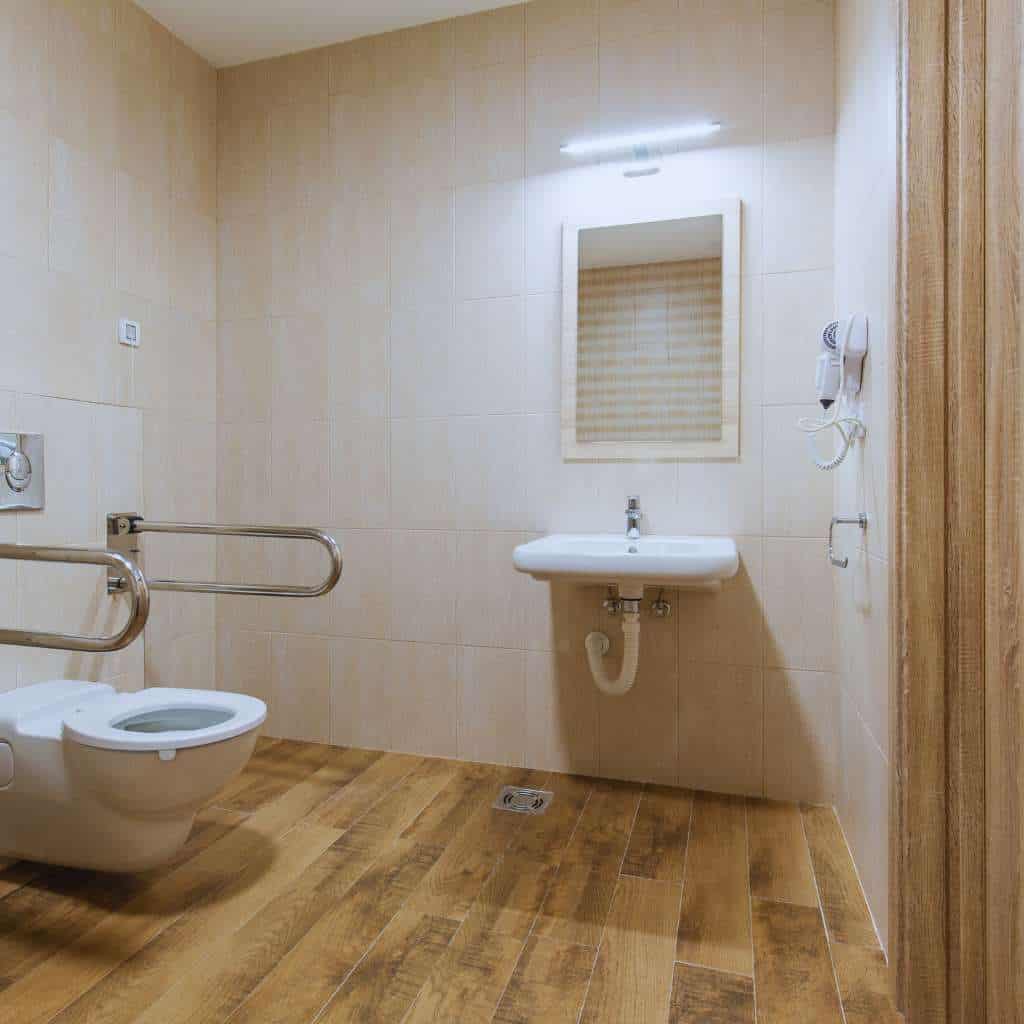
When bathrooms fail accessibility reviews in California, it’s rarely because the owner ignored the law. More often, a small measurement was off by an inch—or an installer made a field decision that didn’t match the plans. Here are the problems I see over and over again in CASp inspections and plan checks.
Wrong toilet centerline
The toilet centerline must fall 16 to 18 inches from the side wall. A slip in framing or rough plumbing can shift that distance just enough to push grab bars out of alignment. Once that happens, nothing else around the toilet will measure correctly. It’s one of the most common and avoidable failures.
Door swing cutting into required clearances
A bathroom can meet every measurement on paper and still fail because the door swings into the turning space or a 30-by-48 clear floor area. California inspectors look at usable space, not theoretical space. If a wheelchair user loses the ability to enter, turn, or exit safely, the layout does not pass.
Turning radius that isn’t actually usable
An accessible bathroom needs a 60-inch turning circle or a compliant T-turn. The issue isn’t usually the room size—it’s what ends up in the room. Trash cans, storage racks, and even mop sinks can cut off part of the turn. When that happens, the bathroom stops functioning as accessible even if the drawings were perfect.
Lost knee clearance under sinks
Lavatories must provide proper knee and toe clearance, and the plumbing must be protected under Title 24. When contractors add cabinetry, oversize P-traps, or exposed valves, they reduce the forward approach. It only takes a small obstruction to make the sink unusable for someone who needs to roll under it.
Dispensers mounted above reach range
California uses stricter reach-range limits than federal ADA. Soap dispensers, towel units, and dryers mounted a few inches too high fall outside the allowed range and often trigger immediate correction notices. This is one of the fastest ways a “finished” restroom ends up on a punch list.
Grab bars installed at the wrong height or length
- Grab bars are measured closely because they’re critical to safe transfers. The most common mistakes are:
• Bars installed too high or too low
• Side bars cut short
• Rear bars not centered behind the toilet
If any of these are off, the stall will not pass inspection, even if everything else is correct.
When a Bathroom Becomes “Non-Compliant” Under ADA or Title 24
A bathroom becomes non-compliant the moment its layout or daily function prevents a person with a disability from using it safely and independently. That is the core definition inspectors work from, and it applies to both ADA and California Title 24. Many owners assume older restrooms are exempt, but that belief is what leads to failed inspections and expensive corrections.
Before going deeper, here are the main triggers that bring a bathroom under current accessibility rules:
Alterations that change layout or fixtures
Tenant improvements that affect circulation
Changes in use or occupancy type
Path of travel obligations during remodels
Maintenance failures that reduce accessibility
No ADA grandfather clause for public-serving areas
These triggers show up in nearly every inspection cycle, and the problems usually start small.
Alterations that change usability
Any alteration that changes plumbing locations, wall layouts, door swings, or fixture heights brings the bathroom under current ADA and Title 24 dimensional requirements. It does not need to be a full remodel. Even moving a sink a few inches can put the entire room back into review if clearances are affected.
Tenant improvements affecting circulation
TI projects are one of the most common causes of unintended violations. When walls shift or traffic patterns change, the restroom becomes part of the new accessible route. This is where owners often benefit from an accessibility review before construction, such as those available through experienced California ADA consultants, because small TI decisions frequently cause turning-space and entry-clearance failures.
Change of use or occupancy classification
When a space converts into a restaurant, medical office, school facility, retail shop, or public-serving area, the restroom must meet accessibility standards that match the new occupancy. Inspectors apply the stricter rule because accessibility is tied to how the public interacts with the building, not the room’s original purpose.
Path of travel scope during renovations
California requires that when a primary function area is altered, the path of travel leading to it must also be upgraded if barriers exist. Restrooms fall directly into this scope. If entry doors are too narrow or maneuvering clearances do not meet the required dimensions, the bathroom is considered out of compliance even if no work was performed inside it.
Maintenance failures that create barriers
A bathroom can also become non-compliant through neglect. Loose grab bars, broken door closers, automatic faucets that fail to activate, blocked knee clearance, or accessories mounted incorrectly during repair all count as barriers. Inspectors treat functional failures the same as dimensional violations because both limit accessibility.
No ADA grandfather clause
Owners often ask if older restrooms are “grandfathered.” The answer is simple. There is no ADA grandfather clause for public accommodations or commercial facilities. If the restroom serves the public or common areas, accessibility barriers must be removed when it is readily achievable. In California, Title 24 adds another layer, especially for new work or permits, which often triggers full compliance.
Plan Check and Permit Triggers for ADA Bathrooms in California
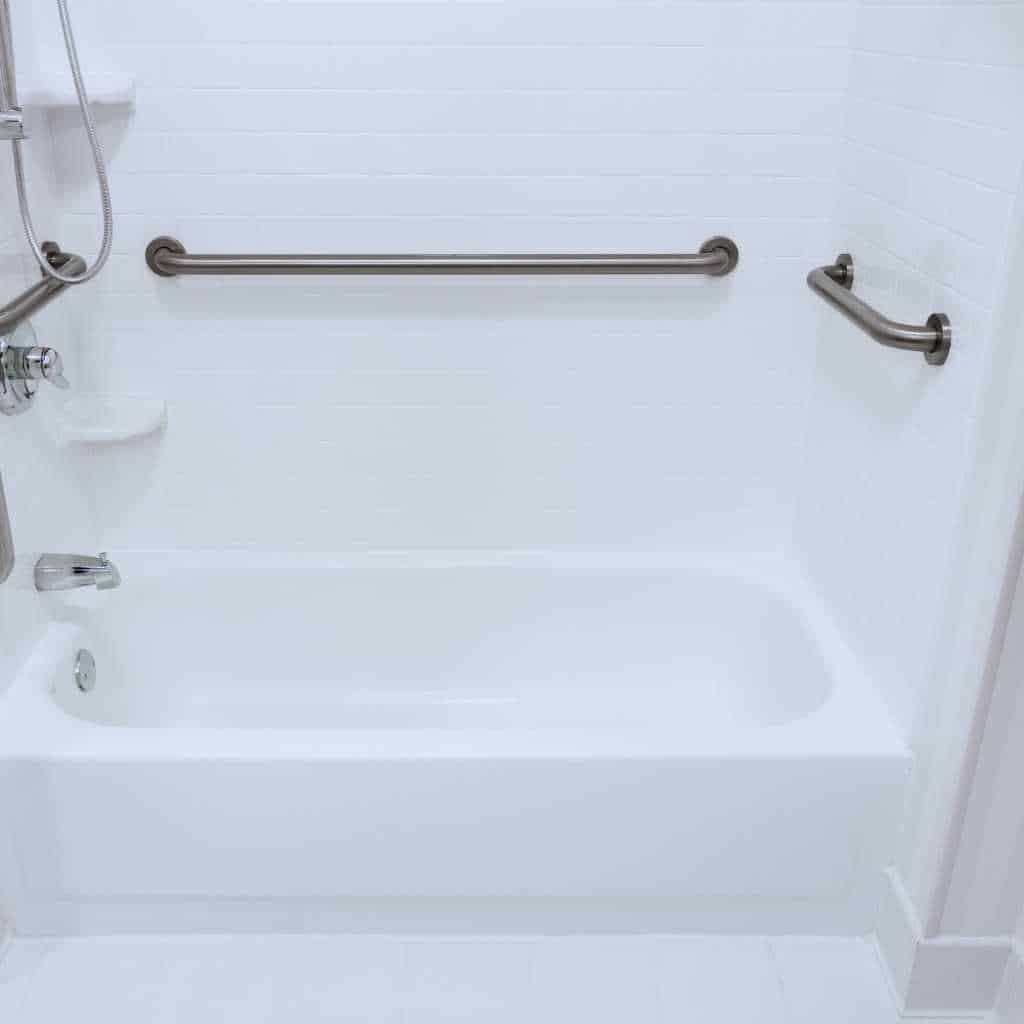
Many owners begin bathroom work without realizing that accessibility rules activate the moment a permit is pulled or a layout shifts. Building departments look closely at restrooms because they sit inside the required path of travel. Once a project crosses certain thresholds, both ADA and California Title 24 apply, even for small commercial spaces.
Do I need a permit for ADA bathroom work in California?
Yes. A permit is required whenever your project changes plumbing locations, fixture heights, partitions, door swings, circulation paths, or electrical work that affects accessibility. California building departments treat bathrooms as regulated spaces because the dimensions, clearances, and fixtures must meet Title 24 accessibility standards.
A permit is also required when:
Walls are moved or removed
A new sink, toilet, or dryer is added or relocated
Door hardware, closers, or entry configuration changes
The room layout affects turning space or clear floor space
Even “simple” work like moving a toilet a few inches can trigger a permit because it changes the required clear floor space and toilet centerline.
Does Title 24 apply to small remodels?
Yes. Title 24 applies the moment a bathroom is altered in a commercial or public-serving building. The size of the project does not exempt the restroom from accessibility rules. A small upgrade, such as adding new partitions or replacing a sink, becomes a compliance trigger because California enforces dimensional accuracy whenever fixtures are replaced or repositioned.
Here is the practical side. Inspectors do not evaluate only what you changed. They check whether the updated room now meets the minimum required clearances, turning radius, door approach space, and fixture mounting heights. If the remodel creates or reveals an accessibility barrier, the bathroom fails even if the work was minor.
When do commercial tenant improvements trigger ADA and Title 24 bathroom compliance?
Tenant improvement projects trigger accessibility review when:
The primary function area is altered
Circulation routes shift
The restroom layout or entry changes
Plumbing or electrical work affects fixtures or accessories
California requires that when a primary function area is modified, the path of travel leading to it must be upgraded if barriers exist. Restrooms sit directly in this path. Even if the TI does not include bathroom work, accessibility may still be required. Before you submit drawings, it helps to get a California ADA compliance review from a specialist who can confirm whether your restroom layout meets Title 24’s dimensional rules.
How do permit triggers work for restaurants, schools, and public facilities?
These building types bring higher scrutiny because they serve the public or vulnerable groups.
Restaurants
New seating layouts, counter changes, or restroom reconfiguration all require plan review. Bathrooms must meet updated turning space, stall dimensions, and lavatory clearance rules.Schools and childcare facilities
California applies strict Title 24 oversight. Even modest restroom changes require a full dimensional check because children and adults use these spaces differently.Medical offices
Accessibility is evaluated at a deeper level because users often have mobility limitations. Inspectors examine clearances with little tolerance for error.Public facilities and civic buildings
Any restroom work triggers compliance because these spaces fall under both ADA and state enforcement.
Bathrooms that fail dimensional checks cannot pass plan review.
Ongoing Maintenance Requirements for ADA Bathroom Features
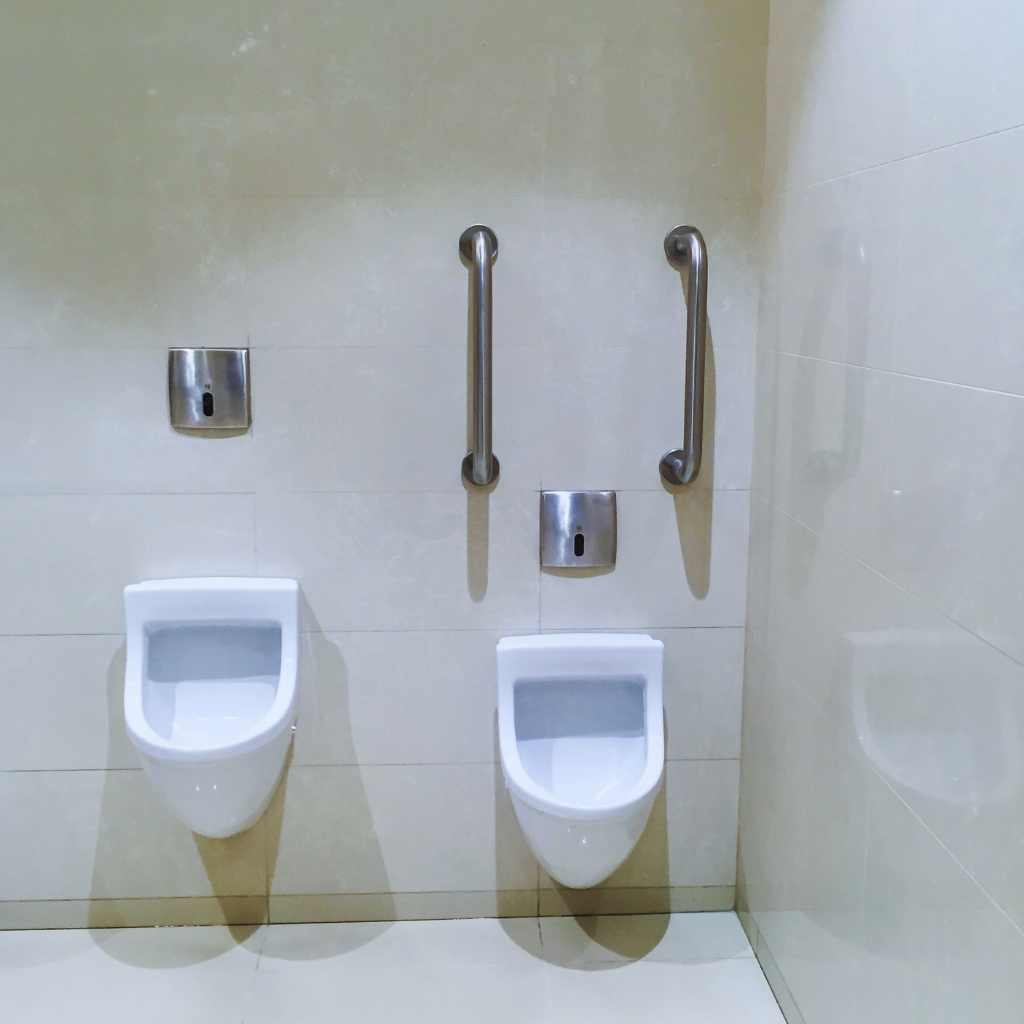
Bathroom compliance is not a one-time construction task. It is a maintenance responsibility that continues for the life of the building. California inspectors see operational failures just as often as layout mistakes, and these issues can render an otherwise compliant restroom non-compliant overnight. Here is what owners and facility teams need to monitor.
Door force measurements
Door force refers to the amount of effort required to open a restroom door. ADA sets clear limits because users need to open the door without strength-based assistance. If the closer is set too tight, or if the door drags on an uneven threshold, the restroom becomes non-compliant. Regular checks with a simple force gauge prevent this failure.
Broken or loose grab bars
A grab bar that wiggles, flexes, or has failed anchors is a safety hazard and a code issue. Grab bars must support significant load, and Title 24 requires proper structural backing behind every bar. When anchors loosen from repeated use, the bar is no longer compliant even if its height and spacing are correct. Maintenance teams should test them by hand each month and re-anchor or replace when needed.
Faucet operability and sensor problems
For a faucet to remain compliant, the operable part must function without tight grasping, pinching, or twisting. Sensor faucets create problems when the sensor stops detecting at the correct range or requires multiple attempts. ADA allows motion-activated controls, but only if they respond consistently. A malfunctioning sensor is treated like an inaccessible control.
Blocked clear floor spaces
A clear floor space is a required usable area that allows someone to approach a toilet, sink, or dispenser. When a trash bin, step stool, or storage item is placed inside that rectangle, the fixture is no longer accessible. This is one of the most common operational failures. If your janitorial crew keeps placing bins under lavatories or next to toilets, that immediately affects compliance.
Loose or misaligned dispensers
Paper towel dispensers, soap dispensers, and sanitary bins often shift over time. When they move above the allowed reach range or drift into a required clear space, they become non-compliant. A quick measurement check every quarter prevents this issue. Dispensers installed on thin partitions may also loosen and tilt, changing their mounted height without anyone noticing.
Lighting issues that affect visibility and contrast
Poor lighting can make tactile signage hard to read or create shadowing that hides controls. Title 24 expects adequate illumination so users can identify operable parts and navigate safely. Burned-out bulbs, misaligned fixtures, or dimmed lighting for energy saving can interfere with contrast levels around accessories, grab bars, and door hardware.
Required Documentation for ADA Bathroom Compliance
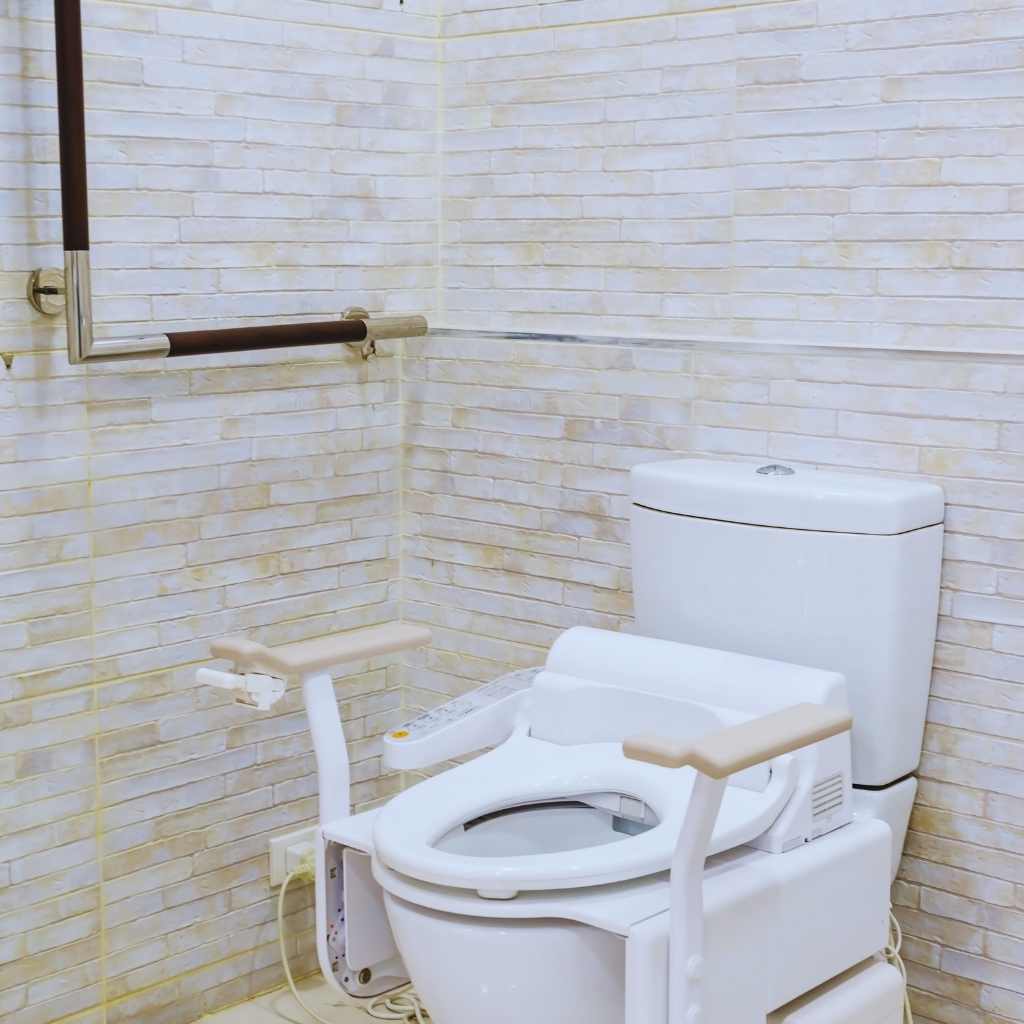
What records should a California owner keep?
Each item below supports a different part of the compliance story. Together, they show that you acted reasonably and maintained accessible features over time.
Plans showing dimensions
These confirm the intended clearances, turning space, fixture locations, and stall layouts. Plans help demonstrate whether the room was designed to meet required measurements on day one.
Inspector sign-offs
These confirm that construction matched the approved plans. Sign-offs are not proof of full ADA compliance, but they show that required permitting steps were followed.
CASp reports
A CASp report is a formal accessibility evaluation under ADA and Title 24. It documents compliant areas and deficiencies and is one of the strongest records you can keep during a dispute.
Product cut sheets
Cut sheets provide manufacturer dimensions, operable part specifications, and mounting requirements for fixtures, dispensers, and hardware. They help verify whether installation met ADA and Title 24 tolerances.
Maintenance logs
A maintenance log documents repairs, door force adjustments, grab bar fixes, dispenser replacements, and lighting corrections. Logs show that issues were not ignored and that required features were maintained.
Why this documentation matters
In a complaint or lawsuit, the question is not only whether the restroom is compliant today. The question becomes whether you can prove a history of reasonable compliance. These records help demonstrate:
• Restroom was designed with required dimensions
• inspections and approvals were completed
• accessibility features were maintained
• corrections were made when needed
Clear documentation often reduces settlement amounts and strengthens your position during a CASp review or accessibility dispute.
Responsibilities When a Bathroom Is Temporarily Out of Service
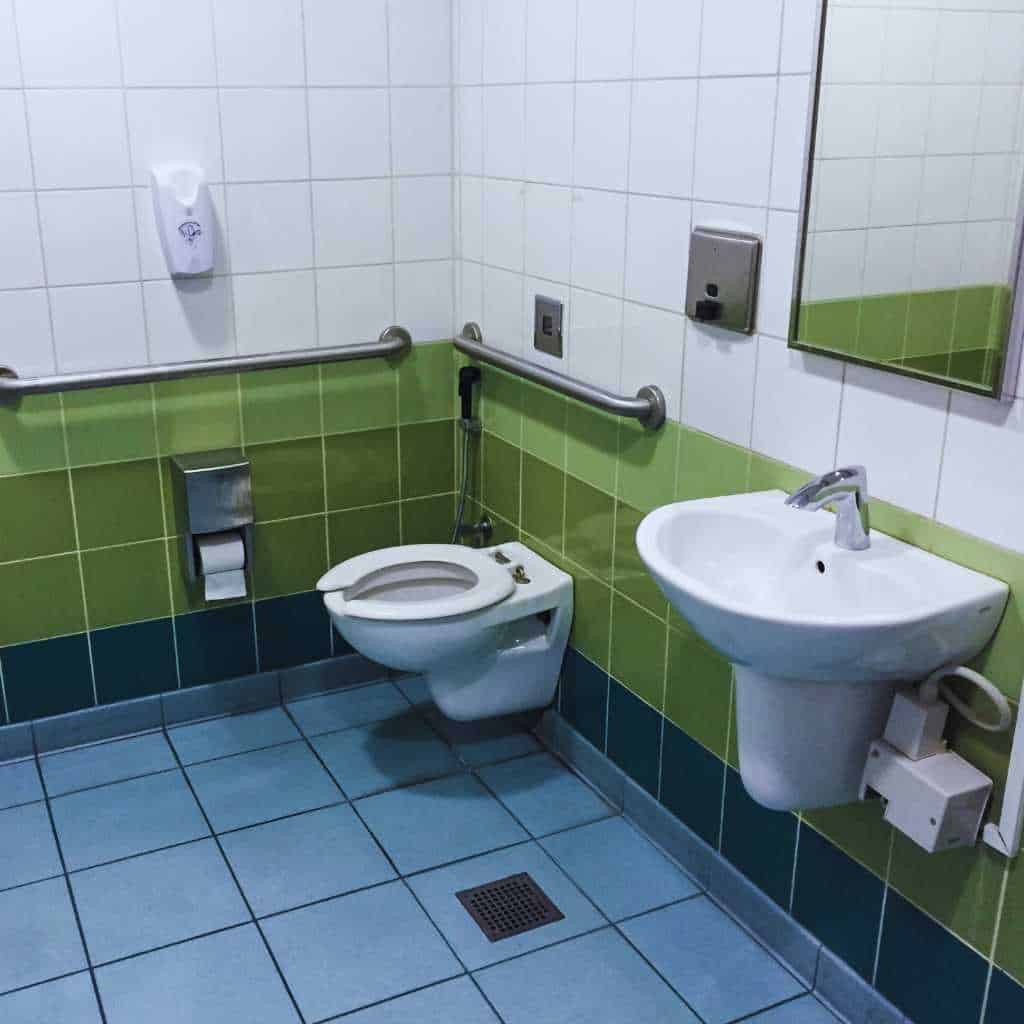
What is an acceptable alternate accessible route?
An alternate accessible route is a path that provides the same functional access a person had before the closure. It must remain unobstructed, meet required slopes, door widths, and maneuvering clearances, and lead directly to the substitute restroom. A route that forces a user through service areas, locked hallways, or steep grades does not meet compliance.
What signage is required during the outage?
Effective temporary signage must tell people where to go and how to get there. Signage should:
- • identify that the accessible restroom is closed
• direct the user to the alternate accessible restroom
• be placed at decision points before a person reaches the closed door
Signs should be readable and include the International Symbol of Accessibility when directing users to the alternate restroom.
Are there communication requirements for public-serving facilities?
Yes. Public accommodations must clearly communicate that the accessible restroom is unavailable and provide information on where the alternative is located. Communication in this context means giving users equal access to information. This may involve verbal notice at service counters, temporary maps, or electronic updates in larger facilities such as airports, stadiums, or transit hubs.
Do temporary facilities ever meet ADA requirements?
A temporary facility is only acceptable if it meets the same ADA and Title 24 bathroom dimensions and features required in a permanent restroom. Most portable restrooms do not meet these standards. If a compliant temporary unit is not available, the building must provide access to an existing compliant restroom elsewhere in the facility or within the same site.
Emergency Features Required in Accessible Bathrooms
What alarms does an accessible bathroom need?
An emergency alarm must reach everyone in the space. That means a clear audible signal and a visible strobe so users with hearing or vision loss receive the warning. These alarms also need clear sightlines. If the strobe is hidden behind a door or fixture, inspectors treat it as a failed installation.
Why are visual indicators required?
A visual indicator gives users and staff quick cues about occupancy or emergency activation. In some facilities, it confirms when an alarm has been triggered inside the restroom. These indicators must be easy to see from typical approach points. Poor placement is a common reason they fail plan review.
When is emergency communication required?
Emergency communication devices appear in specific occupancies. Transit buildings, detention areas, certain medical facilities, and other high-risk public spaces require a reachable way for someone to call for help. The device must work from the floor level, and it must operate without tight grasping or twisting. A disabled or disconnected unit is treated the same as having no system at all.
You can see the same communication expectations applied in complex public settings such as transportation infrastructure, where emergency access features must work consistently because users rely on them during unplanned events.
How must door hardware perform in an emergency?
Door hardware operability determines whether someone can exit the restroom without assistance. Hardware must be reachable, usable with one hand, and must not demand force beyond ADA limits. Sticky latches,
Cost of ADA-Compliant Bathroom Upgrades in California
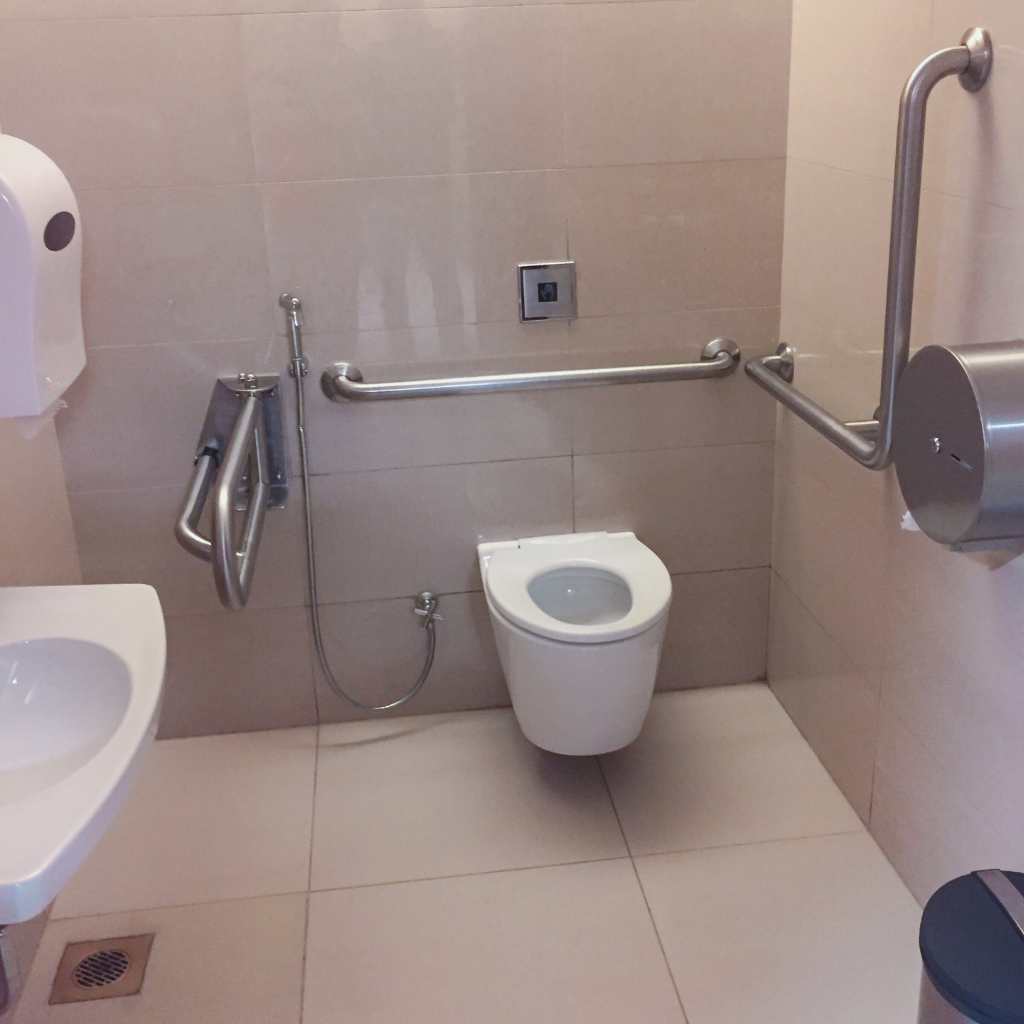
Upgrading a bathroom for ADA and Title 24 compliance usually comes down to fixing space, clearances, and fixture alignment. The costs below reflect what California owners routinely encounter once real measurements are taken. Think of these as practical ranges, not theoretical estimates.
Door Widening and Maneuvering Space
Creating a compliant 32-inch clear opening often requires reframing, electrical relocation, and new hardware. When plumbing or mechanical lines sit in the wall, the price increases. Most commercial buildings fall between 1,200 and 4,500 dollars for this work.
Before widening a door, confirm whether pull-side and push-side maneuvering spaces are also missing. Owners often fix one dimension and overlook the other, which still leaves the door non-compliant.
Expanding Turning Space
Meeting the required 60-inch turning radius can be straightforward in larger rooms, but small bathrooms usually need partition shifts or layout changes. These projects commonly range from 3,500 to 12,000 dollars, depending on how much wall movement is required.
The cost increases when fixtures or cabinetry block the turning circle. Removing or reconfiguring these elements adds labor and finish repairs.
Relocating Toilets and Lavatories
When a toilet or sink fails the clear floor space or centerline requirements, relocation is often the only viable fix. This involves opening walls, reworking plumbing, patching tile, and rebuilding finished surfaces. Most projects land between 4,000 and 15,000 dollars, depending on distance and structural obstacles.
The price climbs when multiple fixtures must move to resolve one clearance issue. This is common in narrow rooms that were never designed for accessibility.
Installing Structural Backing for Grab Bars
If the wall lacks backing to support required grab bar loads, it must be opened and reinforced. This includes blocking, closure, waterproofing, and finish repair. Most owners see 600 to 2,000 dollars, with tile-heavy bathrooms falling toward the upper range.
Backing is non-negotiable. Without it, the bar can pull out of the wall, which creates significant liability.
Sink Replacements and Counter Modifications
Replacing a non-compliant lavatory, adjusting the 34-inch max height, or creating knee and toe clearance typically costs 800 to 2,500 dollars.
Prices rise when stone or custom counters must be trimmed or rebuilt.
Sensor-operated faucets remain compliant as long as they meet operability rules and reach-range limits.
Permitting and Inspection Fees
California jurisdictions charge separate fees for building permits, accessibility plan checks, and inspections. Commercial projects often fall between 350 and 1,200 dollars total.
Special occupancies such as medical offices or entertainment venues can see additional review cycles.
Owners in high-traffic settings often ask for help coordinating these submittals. A structured accessibility review is especially helpful for retail shopping centers, where restroom layout, signage, and path-of-travel all affect compliance.
What to Fix First in an ADA Bathroom: A Priority-Based Cost Sequence

Most owners look at a long list of bathroom issues and don’t know where to start.
Here’s the practical reality: some corrections carry far more legal exposure than others.
The sequence below reflects how accessibility inspectors work through a space and where failures most often trigger complaints or lawsuits.
Priority 1 — Door Access and Maneuvering Clearance
Definition: critical circulation space needed for safe entry and exit.
If a user cannot enter or leave the restroom independently, nothing else matters. Inspectors start at the door because failure here blocks the entire room.
Fixes that usually come first include:
Pull-side and push-side clearances that allow a wheelchair user to open the door without getting trapped.
Thirty-two-inch minimum clear width at the door.
Hardware that can be operated without tight grasping or twisting.
These corrections often cost less than interior reconstruction and eliminate immediate usability barriers.
Priority 2 — Toilet Location, Centerline, and Grab Bars
Definition: required positioning that allows a user to transfer safely to the toilet.
Most complaints come from this area, and failures here carry higher injury risk.
When the toilet centerline is wrong or grab bars are missing or misplaced, the space becomes unusable for many people with mobility impairments.
Common early fixes include:
Adjusting the centerline to 16–18 inches from the wall.
Ensuring rear and side grab bars meet the required lengths and mounting heights.
Correcting clear floor space so the transfer area stays open.
Priority 3 — Turning Space and Circulation Inside the Bathroom
Definition: the required radius or T-turn that allows a wheelchair to maneuver.
Many older California restrooms fail here.
If a wheelchair user cannot turn, back out, or reach fixtures, the room does not function — even if everything else is technically correct.
Fixes may include:
Creating a 60-inch turning circle or a compliant T-turn.
Relocating dispensers, trash bins, or partitions that block movement.
Priority 4 — Lavatory Height, Knee Clearance, and Reach Ranges
Definition: accessible fixture heights and clearance that allow independent use.
Once circulation is functional, inspectors look at lavatories.
Most violations come from blocked knee space, pipes without insulation, or counters installed too high.
Corrections typically involve:
Lowering the lavatory to the 34-inch maximum.
Restoring 27-inch knee clearance at the front.
Ensuring faucets and accessories fall within acceptable reach ranges.
Priority 5 — Accessories and Secondary Fixtures
Definition: supplemental elements required for a safe, usable restroom.
These are lower-cost fixes but still important for compliance.
Many owners fail this part simply because the installer guessed at heights.
Typical adjustments include:
Re-mounting soap dispensers, hand dryers, and paper towels within the required reach range.
Lowering mirrors to the California-specific line for visible height.
Moving sanitary bins and obstacles out of required floor areas.
Priority 6 — Structural Changes and Full Rebuilds
Definition: last-resort corrections when the room footprint cannot meet ADA or Title 24.
This category includes the most expensive work.
You only reach this step when turning space or stall dimensions cannot be corrected without altering walls or plumbing.
Examples include:
Expanding a room to achieve the 60-inch turning radius.
Moving a wall to create a compliant stall.
Relocating plumbing to achieve toilet clearances.
These are typically planned with architectural input.
If an owner is unsure where their project stands, a CASp evaluation helps determine which corrections are essential and which can be phased.
Legal and Financial Risks of Bathroom Non-Compliance
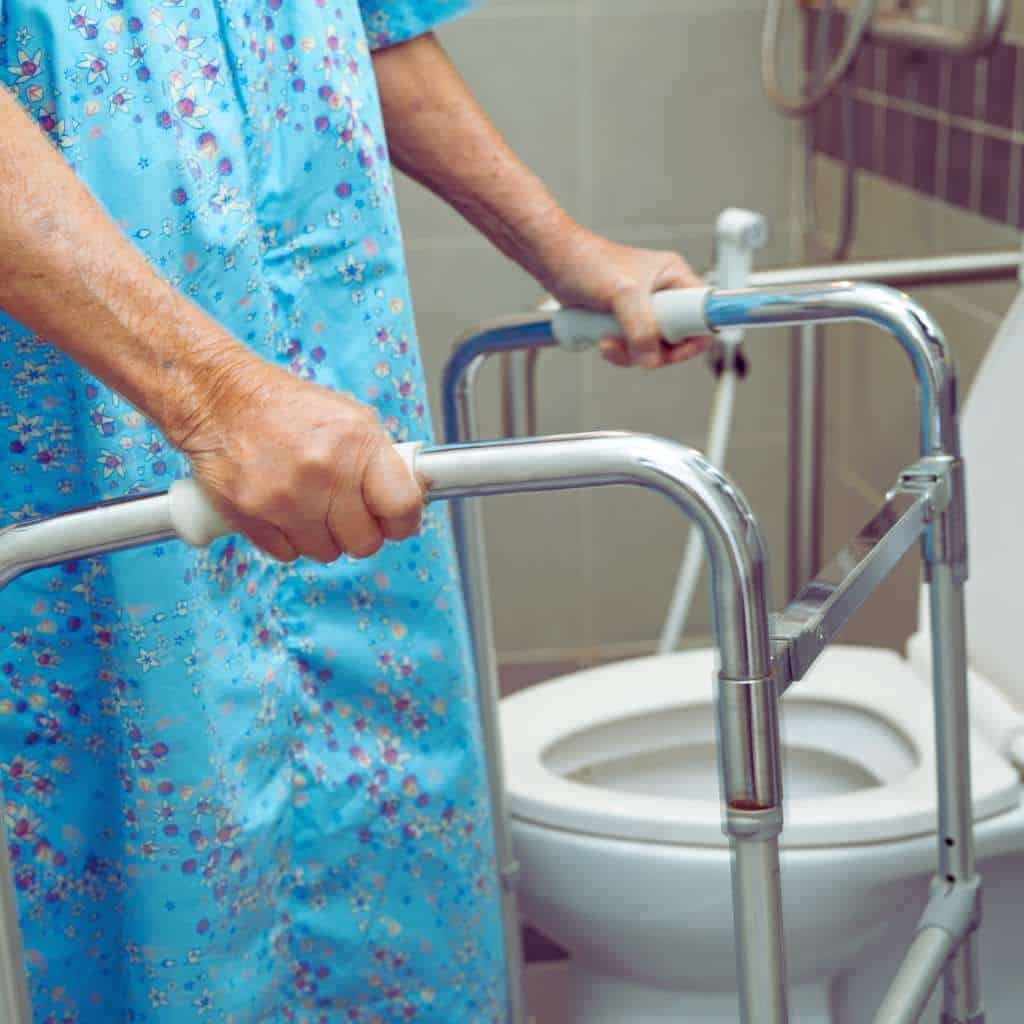
Non-compliant bathrooms create more than inconvenience. In California, they trigger real legal, financial, and insurance problems. Most owners only understand the scope once a complaint or demand letter shows up. This section spells out what happens when a restroom fails ADA or Title 24 requirements.
What enforcement actions can the Department of Justice take?
The DOJ can investigate any restroom that blocks equal access. When they step in, owners may face penalties, corrective work orders, and ongoing monitoring. Even one credible complaint can start the process, and the agency does not limit enforcement to large facilities.
How do private lawsuits work under the Unruh Act?
California allows private individuals to file claims when they encounter accessibility barriers. Under the Unruh Act, each violation carries statutory damages, and repeated encounters can increase that amount. Contractors often install features slightly out of spec, and those small dimensional errors are enough to trigger a lawsuit.
Can non-compliance lead to daily fines?
Yes. If violations are confirmed and remain uncorrected, owners can face daily penalties until the space is fixed. Older buildings see this often because construction scheduling slows down the correction timeline, and each day adds cost.
What do settlement patterns usually look like?
Most cases settle before reaching trial. Settlements often include statutory damages, attorney fees, and a deadline for repairs. Costs climb when owners lack documented maintenance or when inspectors find several issues in the same restroom. A complete record helps reduce disputes during negotiation.
How does non-compliance affect insurance coverage?
Insurers may deny or limit coverage if an injury happens in a non-compliant restroom. A loose grab bar, blocked floor space, or incorrect fixture height can shift blame to the owner for failing to maintain a safe environment. Claims become harder to defend when the owner cannot show routine inspections or repairs.
How CASp Inspectors Evaluate Bathroom Dimensions in California
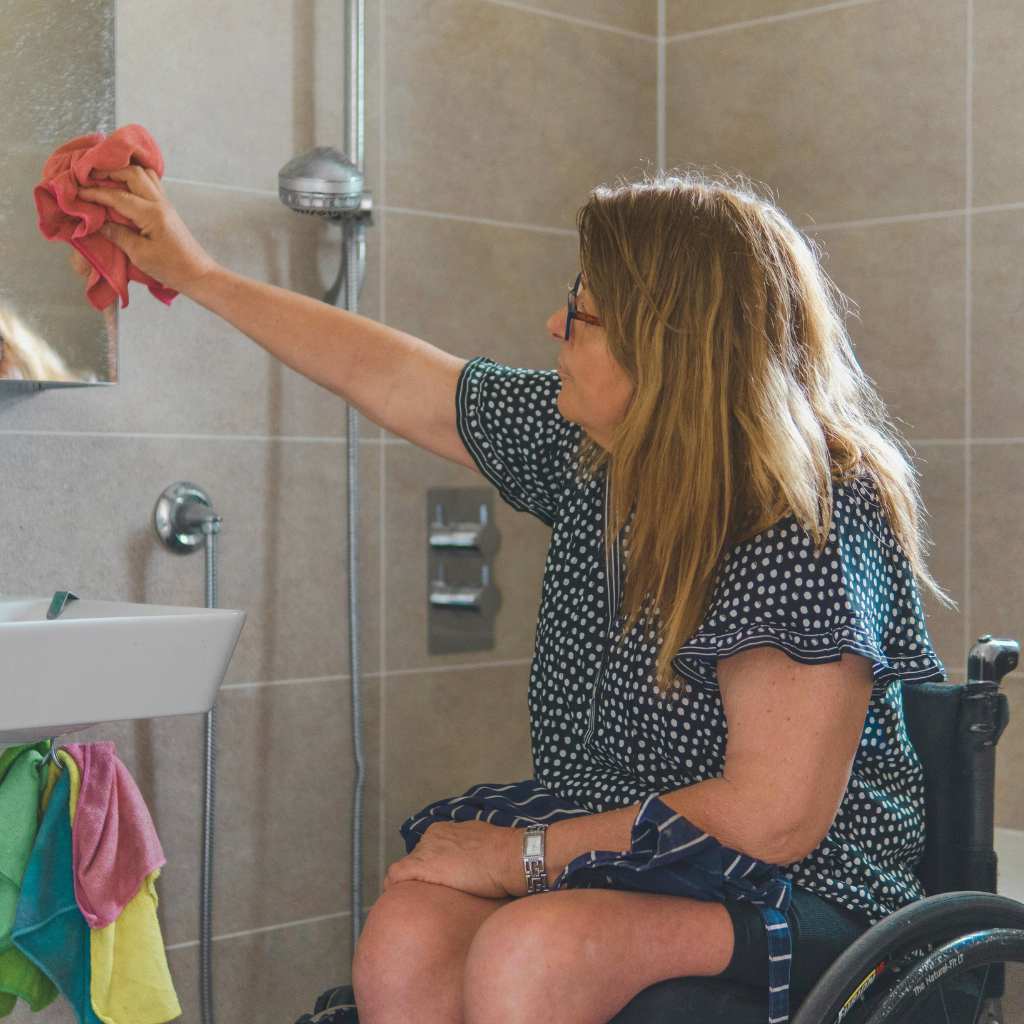
A CASp inspection is the only process in California designed to confirm whether a restroom meets ADA accessibility requirements and California Title 24 dimensional rules. The inspection focuses on how a person actually moves through the space, not just whether the fixtures look correct on paper.
What does a CASp examine inside a restroom?
A CASp reviews the restroom as a complete accessible route, checking whether every movement turning, approaching, transferring, reaching can be done safely and independently. The focus is on measurable clearances, not general impressions. Here’s what gets checked most often:
Turning space
Inspectors confirm the required 60-inch turning circle or T-turn fits without interference from doors, bins, cabinets, or partitions. Even small encroachments can invalidate the space.Clear floor space at fixtures
Each toilet, lavatory, or dispenser must have a 30 by 48-inch usable rectangle. CASp inspectors often find these areas blocked by door swings, trash cans, or poorly placed accessories.Toilet placement and grab bars
Centerline distance, seat height, grab bar length, and mounting height are measured precisely. A one-inch deviation in any of these can create a violation.Lavatory height and knee clearance
The inspector checks 34-inch max height, 27-inch knee clearance, insulated pipes, and any obstructions that limit access.Accessory reach ranges
California uses stricter upper and lower reach limits. Paper towels, dryers, hooks, and soap dispensers are all measured.Door maneuvering space
Pull-side and push-side clearances are checked closely. Many remodels fail because the door encroaches on required accessible floor areas.
Restrooms in retail settings often struggle with blocked clearances, especially when staff add storage or displays. When owners run into layout or circulation issues, they often look for accessibility guidance for retail properties to avoid repeat failures.
Why CASp reports protect owners under California law
A CASp report is one of the strongest forms of risk protection a California building owner can have. It documents every barrier in measurable terms and provides a correction plan that demonstrates good-faith compliance. That’s important because owners who hold a CASp report can qualify as Qualified Defendants, which offers significant legal advantages, including:
Reduced statutory damages
Ability to correct issues within specific cure periods
Lower exposure to demand letters and serial ADA claims
Stronger documentation for insurance and dispute resolution
In practice, a CASp report often prevents a minor dimensional mistake like a dispenser mounted slightly too high from becoming an expensive legal dispute. It also gives owners clarity before leasing space, approving tenant improvements, or planning renovations.
ADA Bathroom Dimension Checklist (Step-by-Step)

A restroom passes or fails on the small details. This checklist follows the same order a CASp inspector uses during a field review, so you can spot problems before they turn into violations..
Turning Space
□ 60 inch turning circle verified
□ T-shaped turn available (when circle not possible)
□ Turning area free of trash cans, storage, temporary items
Clear Floor Spaces
□ 30 x 48 inch clear space in front of toilet
□ 30 x 48 inch clear space at lavatory
□ Clear space free of projections, bins, cabinetry, or doors
□ Clear space properly oriented for forward or parallel approach
Toilet Position & Height
□ Centerline 16–18 inches from adjacent wall
□ Seat height 17–19 inches
□ Space beside and in front of toilet unobstructed
□ Flush control reachable within accessible range
Grab Bars
□ Side bar installed at required height and length
□ Rear bar installed at required height and length
□ Structural backing confirmed (Title 24 focus point)
Lavatory & Knee Clearance
□ Lavatory height ≤ 34 inches
□ Knee clearance 27 inches at 8 inch depth
□ Toe clearance consistent with ADA §306
□ Pipes and trap insulated or guarded
Doors & Maneuvering Space
□ Clear opening ≥ 32 inches
□ Pull-side maneuvering area installed correctly
□ Push-side maneuvering space meets ADA table
□ Door swing does not enter required clear floor spaces
□ Hardware operable with one hand, no tight grasping
Accessories & Fixtures
□ Operable parts within accessible reach ranges
□ Mirrors mounted at correct bottom-edge height
□ Soap/towel dispensers in correct location, not projecting into clear spaces
□ Hand dryers at compliant mounting heights (Title 24 nuance)
Lighting & Visibility
□ Illumination adequate for signage and controls
□ Tactile signage in compliant location
□ No glare or shadowing that interferes with usability
Path of Travel to Restroom
□ Route is accessible, level, and unobstructed
□ Thresholds meet ADA max height
□ Door hardware and corridor widths compliant
Documentation
□ Measurements photographed
□ Notes recorded for each non-compliant item
□ Maintenance issues logged separately
Practical Answers to Common Bathroom Dimension Questions

What is the minimum ADA bathroom size in California?
There’s no single minimum room size.
Compliance depends on whether the required movements fit inside the room. You need a 60 inch turning circle or a valid T-turn and enough clear space at each fixture. If those movements can’t be made, the room fails, no matter how large it looks on paper.
Can a small restroom still pass ADA requirements?
Yes, if every clearance works in real space.
Plenty of small rooms pass inspection. What matters is unblocked access to the toilet, usable knee space at the sink, and enough door maneuvering space to avoid pinch points. When any one of those is missing, the size of the room won’t save it.
Are older bathrooms exempt from ADA or Title 24?
No. Age doesn’t create an exemption.
Public accommodations must remove barriers when readily achievable, and California applies Title 24 whenever a project triggers permits or alters the path of travel. Many owners assume old layouts are “grandfathered,” but that isn’t how ADA enforcement works.
What toilet distances do inspectors look for?
The toilet centerline must sit 16 to 18 inches off the side wall.
That spacing preserves the transfer zone and ensures the grab bars work as intended. The 30 by 48 inch clear space beside the toilet must also stay open; even a misplaced trash can can jeopardize compliance.
Are automatic faucets required?
No. The faucet just has to be operable without tight grasping or twisting.
Automatic models are fine, but manual faucets meet the rule when they’re easy to use and fall within the proper reach range. California inspectors often check this because some touchless faucets become unreliable over time.
Are vertical grab bars acceptable?
Yes, but they’re optional not replacements.
Vertical bars can work as auxiliary supports, but the required horizontal bars on the side and rear walls determine whether the layout passes or fails. An inch off in height or length is enough to cause a problem.
Final Guidance for California Property Owners
If you manage a building in California, getting bathroom dimensions right is one of the simplest ways to avoid costly accessibility problems. The rules are strict because they shape how people move in the space. The moment clearances are blocked or fixtures are installed off-spec, the risk of an access complaint climbs.
The most effective approach is to review your restroom layout early, before permits or construction begin. Check the turning space, clear floor areas, door approach, toilet placement, and accessory heights against the ADA and Title 24 requirements. These details decide whether a project passes inspection or becomes a correction order.
California owners often bring in a certified specialist once they realize how many dimensional rules interact. A qualified review helps confirm that the plans match the accessibility laws and that nothing has been overlooked. If you need a deeper evaluation of your building’s accessibility conditions, you can speak with a certified professional through an ADA compliance consultation.
Correcting issues on paper is always easier than correcting them after walls and plumbing are set. Taking the time to verify dimensions now protects you from complaints, delays, and financial exposure later.
ADA and Title 24 Resources
ADA.gov (Department of Justice – ADA Standards)
https://www.ada.gov/law-and-regs/design-standards/
California Building Standards Code – Title 24 (Official Publication Access)
https://www.dgs.ca.gov/BSC/Codes
CASp Program – Certified Access Specialist Program (DSA)
https://www.dgs.ca.gov/DSA/Certifications/Page-Content/CASp-Certification
U.S. Access Board – ADA Accessibility Guidelines (ADAAG)